It started with two 19-year-olds stuck at home during COVID, frustrated that groceries took days to arrive. Today, their company delivers groceries in 10 minutes to over 1.7 million people daily. This is the complete Zepto story — and why it is one of India’s most audacious startup journeys.
The Founders — Who Built Zepto?
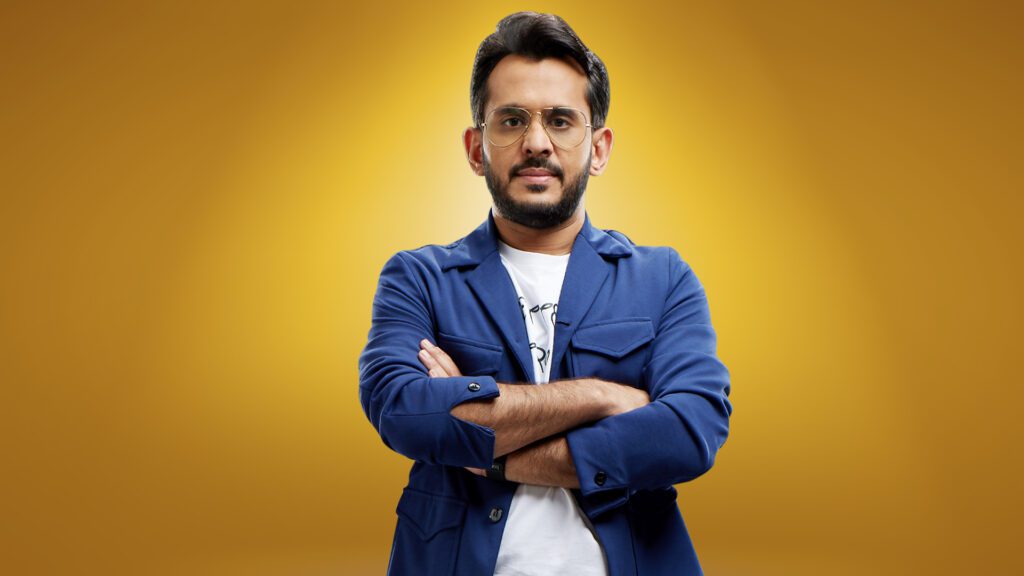
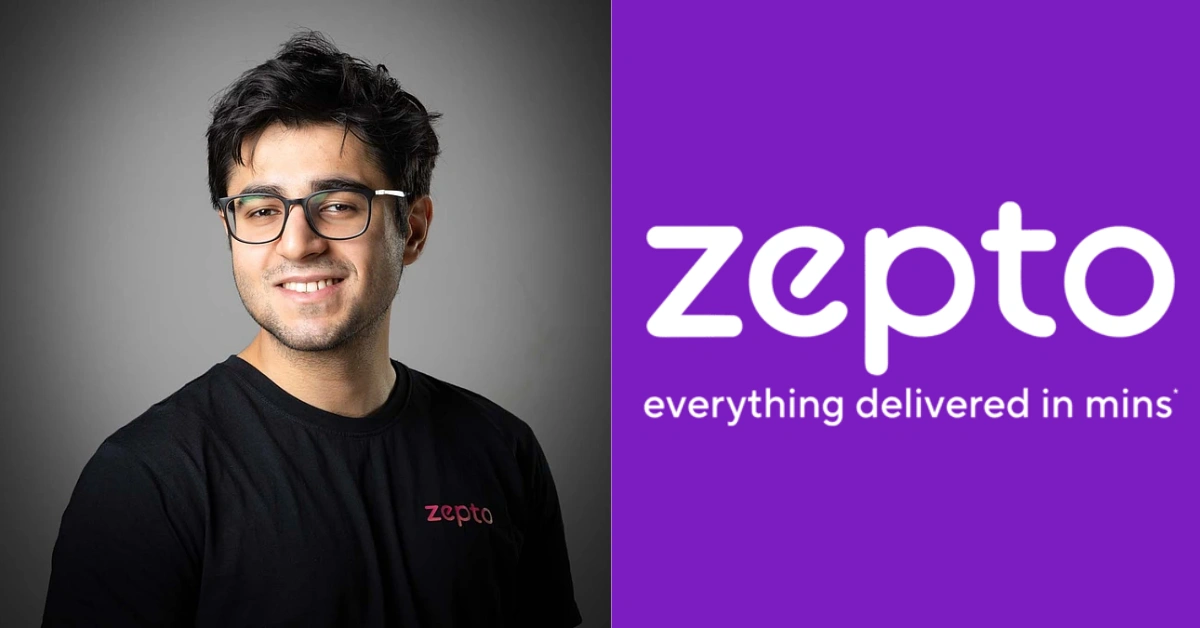
Zepto was founded by Aadit Palicha (CEO) and Kaivalya Vohra (CTO and Head of Product & Technology) — two childhood friends who were 19 years old when they launched what became one of India’s fastest-growing startups.
Both had been admitted to Stanford University’s Computer Science programme — one of the most prestigious technology programmes in the world. They gave it up.
Contrary Capital, one of their early investors, offered to fund them if they dropped out. They did. It is one of the boldest bets in Indian startup history, and it is paying off.
The Origin Story — COVID Locked Them In, Opportunity Unlocked
The story of Zepto began during the COVID-19 lockdown of 2020. Palicha and Vohra were stuck in their Mumbai homes and found it nearly impossible to get groceries delivered quickly. Orders took two to three days. The founders — two bachelors living alone — focused on this exact problem.
Their first venture was KiranaKart — a grocery delivery service that partnered with local kirana stores to deliver in 45 minutes or less. They raised a $730,000 pre-seed round from Global Founders Capital, 2 AM Ventures, Contrary Capital and angel investors.
But KiranaKart’s model did not gain traction. Partnering with local kirana stores meant inconsistent inventory, variable quality and unreliable delivery times.
The founders made a critical pivot — and that pivot became Zepto.
The Pivot — From KiranaKart to Zepto
In 2021, the company rebranded from KiranaKart to Zepto and fundamentally changed its model. Instead of partnering with kirana stores, Zepto built its own network of dark stores — small, strategically located fulfilment centres that carry curated inventory and are designed exclusively for ultra-fast order fulfilment.
No customer-facing retail. No walk-in customers. Just rapid, precision-driven delivery.
This model allowed Zepto to control inventory quality, guarantee delivery times and optimise every aspect of the fulfilment chain. The 10-minute promise became achievable — and scalable.
They also participated in Y Combinator’s accelerator programme while building the first version of the platform, giving them access to the world’s most elite startup network.
Funding Journey — From $730K to $7 Billion
Zepto’s funding trajectory is almost unprecedented in Indian startup history:
| Round | Date | Amount | Valuation | Key Investors |
| Pre-Seed (KiranaKart) | Jan 2021 | $730,000 | — | Global Founders Capital, Contrary Capital |
| Series A | Oct 2021 | $60M | $225M | Nexus, Y Combinator, Global Founders Capital |
| Series C | Dec 2021 | $100M | $570M | Y Combinator Continuity Fund |
| Series D | May 2022 | $200M | $900M | Y Combinator, Nexus, Glade Brook |
| Series E (Unicorn) | Aug 2023 | $200M | $1.4B | Multiple VC investors |
| Series F | Jun 2024 | $665M | $3.6B | — |
| Series G | Aug 2024 | $340M | $5B | — |
| Domestic Round | Nov 2024 | $350M | ~$5B | 100% Indian funding round |
| Series J | Oct 2025 | $450M | $7B | CalPERS (led), StepStone, Nexus, Glade Brook |
| Total Raised | — | ~$2.93 billion | — | 146+ investors |
Zepto became a unicorn (valuation above $1 billion) in August 2023 — just two years after launching in its current form.
The October 2025 $450 million raise was led by CalPERS — the California Public Employees’ Retirement System, a massive US pension fund. This is a highly unusual lead investor for a Series J in an Indian startup and signals strong institutional confidence in India’s quick commerce sector.
Revenue & Business Metrics — How Big Is Zepto?
| Metric | FY23 | FY24 | FY25 |
| Operating Revenue | ₹2,026 Cr | ₹4,454 Cr | Growing |
| Net Loss | ₹1,272 Cr | ₹1,249 Cr | ₹3,367 Cr |
| GMV | — | $1B+ (₹8,300 Cr) | Growing |
| Daily Orders | — | — | 1.7 million |
| Monthly Transacting Users | — | — | 10 million+ |
| Dark Stores | — | 250+ | 1,000+ |
| Cities | — | 10 metros | 80+ |
The company scaled from 500,000 daily orders five quarters ago to 1.7 million daily orders by late 2025. By May 2024, 75% of Zepto’s dark stores had achieved full EBITDA positivity — a critical milestone that showed the unit economics were working.
The Dark Store Model — Zepto’s Secret Weapon
Zepto’s competitive advantage is its dark store network. A dark store is a small (typically 2,000–4,000 square feet) warehouse-style fulfilment centre located in dense urban areas. It carries 25,000+ products — groceries, fresh produce, daily essentials, snacks, personal care, electronics and more.
When you order on Zepto, the nearest dark store receives the order, a picker assembles it in minutes, and a delivery rider takes it to your door. The entire process is designed for under-10-minute fulfilment.
As of 2025, Zepto operates over 1,000 dark stores across 80+ cities in India. Smaller Indian cities already account for nearly 20% of total orders.
Zepto’s Expanding Universe — Beyond Groceries
Zepto has evolved well beyond its original grocery focus:
- Zepto Café — Hot food and ready-to-eat meals delivered in 10 minutes. Currently a $110M+ annual run rate business. Paused in some cities due to staff challenges, but recovering rapidly.
- Zepto Pharmacy — 10-minute medicine delivery launched in August 2025 in Delhi, Mumbai, Bengaluru and Hyderabad.
- Zepto Atom — A paid analytics platform (launched May 2025) that helps brands understand customer behaviour in real time, including live PIN-code level performance maps.
- Electronics & Fashion — Zepto has expanded into electronics, fashion and home décor categories.
- Zepto Nova — A programme launched in January 2026 to support manufacturing startups.
Zepto IPO 2026 — The Next Big Step
Zepto has filed its Draft Red Herring Prospectus (DRHP) under the confidential route with SEBI, planning to raise approximately ₹10,000 crore ($1.22 billion) through its IPO.
The company was valued at $7 billion in its last private round in October 2025. With roughly $900 million in net cash on its balance sheet after the latest raise, Zepto has a substantial liquidity cushion heading into the IPO.
However, challenges remain. Zepto’s losses widened significantly in FY25 to ₹3,367 crore from ₹1,249 crore in FY24. In a market where Blinkit (Eternal/Zomato) recently turned profitable and Swiggy is publicly listed, investor scrutiny on Zepto’s path to profitability will be intense.
Competition — The Quick Commerce War
Zepto competes in India’s fiercest consumer internet battleground:
| Competitor | Parent | Key Strength |
| Blinkit | Eternal (Zomato) | Market leader by order volume; turned profitable |
| Swiggy Instamart | Swiggy (Listed) | Food delivery network advantage |
| BB Now (BigBasket) | Tata | Established supply chain; 700→1,200 dark stores |
| Amazon Now | Amazon | Launched 15-minute delivery in Jun 2025 |
| Flipkart Minutes | Walmart | Tech and logistics muscle |
India’s quick commerce market is projected to reach $42–100 billion — a range that reflects both the enormous opportunity and the massive uncertainty of this sector.
Zepto’s Business Model — How Does It Make Money?
Zepto’s revenue comes from multiple streams:
- Product sales — direct margin on every grocery and product sold
- Delivery fees — charged per order below minimum basket size
- Subscription revenue — premium membership plans with perks
- Advertising / Retail Media — brands pay to appear prominently on Zepto’s platform
- Zepto Atom — paid analytics subscription for brands
- Zepto Café — food delivery margin
The company also offers Super Saver — discounts for large grocery orders — to increase basket size and improve per-delivery economics.
Zepto Startup Story 2026 — FAQs
Q. Who founded Zepto?
Aadit Palicha (CEO) and Kaivalya Vohra (CTO) — childhood friends who dropped out of Stanford University’s Computer Science programme to build Zepto.
Q. What was Zepto called before?
KiranaKart — a grocery delivery service partnering with local kirana stores. It rebranded to Zepto in 2021 when the founders pivoted to a dark store model.
Q. What is Zepto’s valuation in 2026?
$7 billion (₹~58,000 crore) — based on its October 2025 $450 million funding round led by CalPERS.
Q. How much has Zepto raised in total?
Approximately $2.93 billion from 146+ investors across multiple rounds since 2021.
Q. Is Zepto profitable?
Not yet at the net level — losses widened to ₹3,367 crore in FY25. However, 75% of dark stores had achieved full EBITDA positivity by May 2024, showing improving unit economics.
Q. When is Zepto’s IPO?
Zepto has filed its DRHP confidentially and is targeting a ₹10,000 crore ($1.22 billion) IPO in 2026.
Q. How many daily orders does Zepto handle?
1.7 million daily orders as of late 2025, up from 500,000 five quarters earlier.
Q. Is Zepto available in Delhi?
Yes — Delhi (NCR) is one of Zepto’s key markets, with multiple dark stores serving the capital region. Zepto Pharmacy also launched in Delhi in August 2025.