Let’s start with who we’re talking about
If you’ve ever used Practo — booked a doctor online, stored your prescriptions digitally, or skipped the nightmare of a hospital reception — you’ve already been touched by Shashank ND’s work. He co-founded Practo back when “booking a doctor on your phone” sounded like science fiction in India. That company went on to become one of the country’s most well-known health-tech platforms.
But Shashank has moved on. He’s done something far more interesting than iterate on what he already built. He’s started from scratch, with a new team, a new problem, and a genuinely scary-good insight about what’s broken in Indian healthcare.
His new company is called Cent.
Here’s the uncomfortable truth Cent is built on
Most people in India — and honestly, most people everywhere — only find out they’re seriously ill when their body finally waves a white flag. A cough that won’t go away. Chest pain at 2am. Sudden weight loss that seems unexplained. By the time symptoms show up loud enough for you to act on them, the disease has often been quietly growing for years.
That’s not a failure of treatment. Indian hospitals can be world-class at treating things once they’re found. The failure is earlier — in the finding. We have almost no culture of proactive, deep health screening. You don’t go get scanned unless something already feels wrong. And by then, for a lot of conditions, the window for easy intervention has closed.
Shashank looked at this and thought: what if we fixed the part that happens before the hospital?
What Cent actually does — in plain English
Cent isn’t a hospital. It’s not a pharmacy app. It’s not another doctor-on-demand platform. Think of it more like a full-body investigation — a single, comprehensive session where they run you through some of the most advanced medical imaging and testing available, put all the results through AI analysis, have real doctors review everything, and hand you back a detailed map of your own health.
We’re talking full-body MRI, cardiac CT scans, ECG, DEXA bone scans, over 120 blood and urine tests, and even genomic testing — all in one go. Their system can screen for more than 300 different conditions in a single visit. Cancer. Heart disease. Neurological issues. Metabolic disorders. The stuff that kills most people.
They call their framework CCNM — Cardiac, Cancer, Neurological, Metabolic. These four categories collectively account for the overwhelming majority of deaths worldwide, somewhere in the range of 70-74%. Cent is laser-focused on catching these things early, when they’re still treatable, still manageable, sometimes even reversible.
The team Shashank built
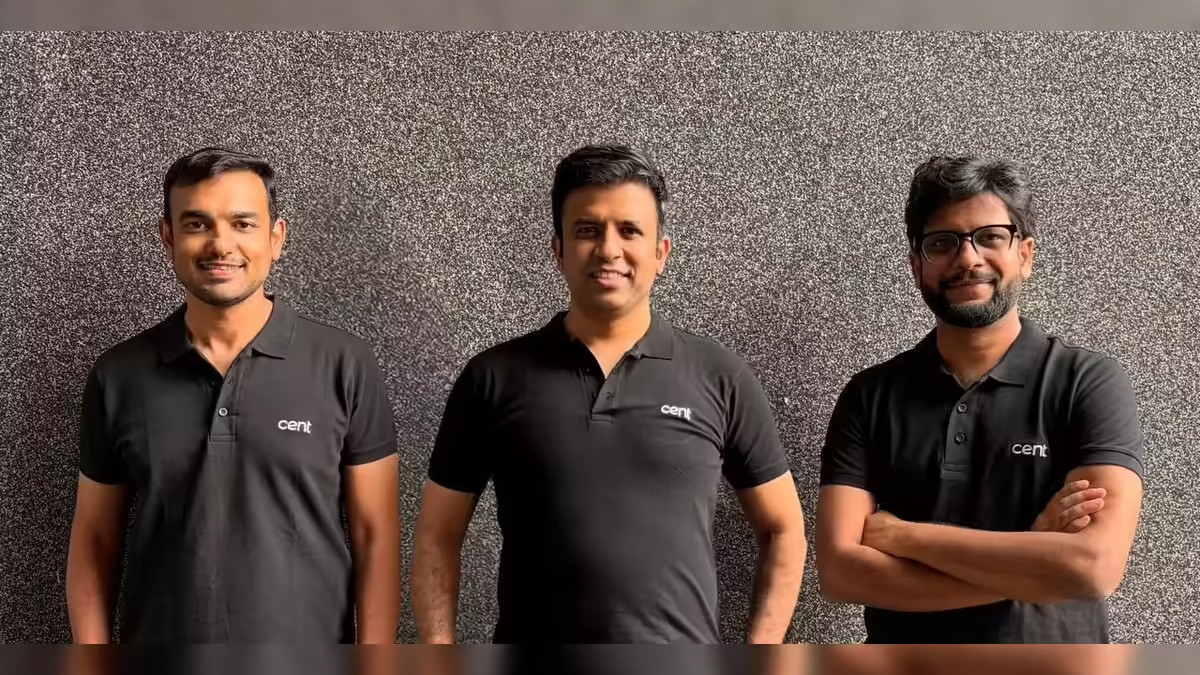
Shashank didn’t do this alone. He brought in Arpit Garg, who previously worked at Lenskart and clearly knows how to build consumer-facing health products at scale, and Anshul Khandelwal, formerly at Ola Electric, who now leads the business side as CBO.
The founding team has a refreshingly honest way of talking about what they’re building. Arpit pointed out that five years ago, this kind of integrated, AI-assisted screening simply wasn’t technically possible. The imaging technology, the AI radiology tools, the multi-omics blood analysis — none of it had converged into something usable at this level. That window has only recently opened, and Cent is walking through it.
The numbers that should make you pay attention
Cent has been running real screenings since the first quarter of this financial year, and the early results are striking.
They’ve done over 1,500 scans so far. Of those, 26% flagged meaningful health issues that the person didn’t know about. And somewhere between 3 to 4% — people who walked in feeling completely fine — had serious conditions detected. We’re talking cancers. Significant cardiac problems. Things that, left undetected, could have become fatal within a few years.
One in every 25 people walking in healthy, leaving with a potentially life-saving diagnosis. That’s not a small number. That’s the kind of stat that makes you rethink whether you should book one of these scans yourself.
The business side is also growing quickly — roughly 50% month-on-month growth since they went live, with annualised revenues already around $2 million. For a company this young, that’s a real signal.
The funding and who backed them
Cent just came out of stealth mode and announced a seed round of around $5 million, which works out to roughly ₹45.8 crore.
Two investors put their money in. The first is OneFlow Holdings, which is Shashank’s own family office — so he’s literally putting his own capital where his conviction is. The second is South Park Commons, a San Francisco-based venture firm that’s become legendary in startup circles for backing exceptional founders at the absolute earliest stage — often before the founders themselves have fully figured out what they’re building. Getting South Park Commons interested means something. They’re not chasing trends. They back people they believe in.
What happens next
Cent is planning to open physical screening centres across Mumbai, Delhi, and Bengaluru very soon, with Pune and Hyderabad following after. These aren’t general clinics — they’re purpose-built, single-focus facilities designed exclusively for this kind of early detection work. The goal is to make the experience feel less like a hospital visit and more like a focused, efficient health audit.
By the end of this year, they’re aiming to have completed 5,000 scans. Given the pace they’re moving at, that seems entirely believable.
Why this actually matters
Here’s the simple version: we’ve spent decades building better and better treatments for cancer, heart disease, and other killers. And yet mortality rates for these conditions remain devastating — largely because most people are diagnosed too late.
Cent is betting that the real leverage isn’t in treatment. It’s in detection. Find it early, and a scary diagnosis becomes a manageable one. Miss it, and by the time you know something’s wrong, your options are far more limited.
It’s a straightforward idea. But building the infrastructure, the technology stack, the clinical protocols, and the trust required to make regular full-body screening a normal part of life — that’s an enormous undertaking. And the fact that it’s being led by someone who’s already done something like this once before makes it a story worth following very closely.