A full breakdown of Inamo — the quick commerce Infrastructure-as-a-Service startup founded in 2024 by Sumit Anand and Rupesh Thakare — covering its $8 million Series A from Prime Venture Partners, 80 dark stores, 1.8 million monthly orders, 10x revenue growth in 10 months, and plans to expand to 16 cities and 200 dark stores targeting India’s $40 billion quick commerce market.
You open Blinkit. You order chips, maybe some milk, possibly a charger you forgot to pack. Fourteen minutes later, someone’s at your door.
You don’t think twice about it. Why would you?
But somewhere between you tapping “order” and that delivery guy ringing your bell, there’s a whole world of chaos being managed silently. Someone had to figure out where to store those chips so they’re close enough to your house. Someone had to make sure the inventory didn’t run out at 11 PM on a Friday. Someone had to coordinate the guy on the bike, the warehouse, and the app — all at the same time.
That “someone” is increasingly a company called Inamo. And most people have never heard of them.
Born Out of Frustration
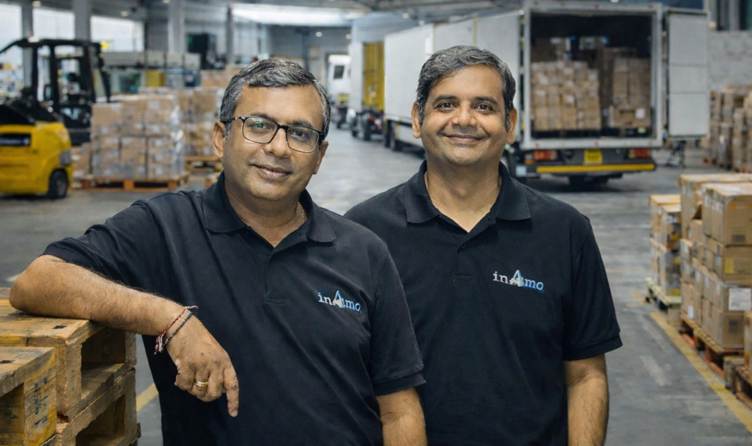
Sumit Anand spent years inside companies like Dunzo and Ola. He saw the quick commerce wave coming — but he also saw the cracks. Brands wanted to ride the 10-minute delivery trend, but the backend infrastructure to support it was either too expensive, too complicated, or simply didn’t exist in a form that made sense.
His co-founder Rupesh Thakare came from the world of finance and supply chains — Goldman Sachs, Ninjacart — and he understood exactly what good logistics infrastructure should look like, and how far India still was from having it.
So, in 2024, they decided to build it themselves. Not another delivery app. Not another marketplace. Something more fundamental — the backbone that everything else runs on.
What They Actually Built
Imagine you’re a mid-sized snacks brand. You’ve got a great product, solid demand, and you want to be on Zepto and Blinkit tomorrow. But you don’t have dark stores. You don’t have a delivery fleet. You don’t have technology that tells you how much stock to keep in Andheri versus Koramangala.
Inamo walks in and says — we’ll handle all of that.
They set up and manage dark stores (those small, neighbourhood warehouses that you never see but that make fast delivery possible). They use data to figure out exactly where your product should be stocked, in what quantity, and when to replenish it. They manage last-mile delivery. They plug into your existing systems without you needing to rebuild everything from scratch.
It’s Infrastructure-as-a-Service — but for quick commerce. You bring the product. They bring everything else.
18 Months. 10x Growth. 1.8 Million Orders a Month.
Here’s what makes this story genuinely impressive.
Inamo is barely a year and a half old. And yet, they’re already live across six major Indian cities, running over 80 dark stores, and processing 1.8 million orders every single month. Their revenue has grown 10 times over in just the last 10 months.
That’s not “startup traction.” That’s a rocket.
The $8 Million Vote of Confidence
Prime Venture Partners just led an $8 million Series A round into Inamo — $6 million in equity and $2 million in venture debt. Their earlier backers — Shastra VC, Antler India, and Gemba Capital — all came back to the table too, which is always a good sign. When people who’ve already given you money want to give you more, you’re doing something right.
Total funding now stands at $11 million since the company was born.
So Where Does the Money Go?
They’re going from 6 cities to 16. From 80 dark stores to 200+. The technology is getting smarter. The team is growing. And the goal is clear — make it so easy and affordable for any brand to plug into quick commerce that there’s no reason not to.
Right now, only the big players can afford to build their own fulfilment infrastructure. Inamo wants to level that playing field completely.
The Bigger Story
India’s quick commerce market is on its way to $40 billion by 2030. It’s growing at nearly double the pace of regular e-commerce. Every brand — from Fortune 500 companies to a founder running a D2C startup from her apartment — wants a piece of it.
But wanting access and actually having the infrastructure to deliver in 10 minutes are two very different things.
That gap is Inamo’s entire business. And the fact that they’ve scaled this fast, this quietly, says everything about how real the problem is — and how well they’re solving it.
Next time your order shows up at your door in under 15 minutes, you probably won’t think about what made that possible.
But now you know someone’s making it happen.