Starting a business in India is becoming easier due to government initiatives that encourage innovation and entrepreneurship. One of the most important initiatives launched by the Government of India is the Startup India program. If you are planning to launch a startup or already running a new business, getting Startup India Registration (DPIIT recognition) can provide significant advantages such as tax benefits, funding opportunities, simplified compliance, and networking support.
Startup India Registration is not simply about registering a company. It is a government recognition that allows innovative businesses to access various benefits designed to support startups during their early stages of growth. Many entrepreneurs misunderstand the difference between company registration and Startup India recognition, but both play different roles in building a startup ecosystem.
In this detailed guide, you will learn everything about Startup India Registration, including eligibility criteria, the registration process, required documents, benefits, common mistakes, and answers to frequently asked questions. Whether you are a first-time entrepreneur or an experienced founder launching a new venture, this guide will help you understand how to register your startup under the Startup India initiative.
Startup India Registration: Complete Guide for Founders
Startup India Registration is a government initiative designed to support and promote innovative startups in India. Through the Startup India scheme, eligible businesses can receive DPIIT recognition, tax benefits, easier compliance, access to funding opportunities, and various government support programs. If you are planning to launch a startup or already running an early-stage company, completing the Startup India registration process can help your business grow faster and gain credibility in the startup ecosystem.
In this complete guide, you will learn everything about Startup India registration including eligibility criteria, documents required, the step-by-step registration process, and the key benefits available to recognized startups. Whether you are a first-time founder or an entrepreneur looking to scale your business, this guide will help you understand how to register your startup in India successfully.
What is Startup India?
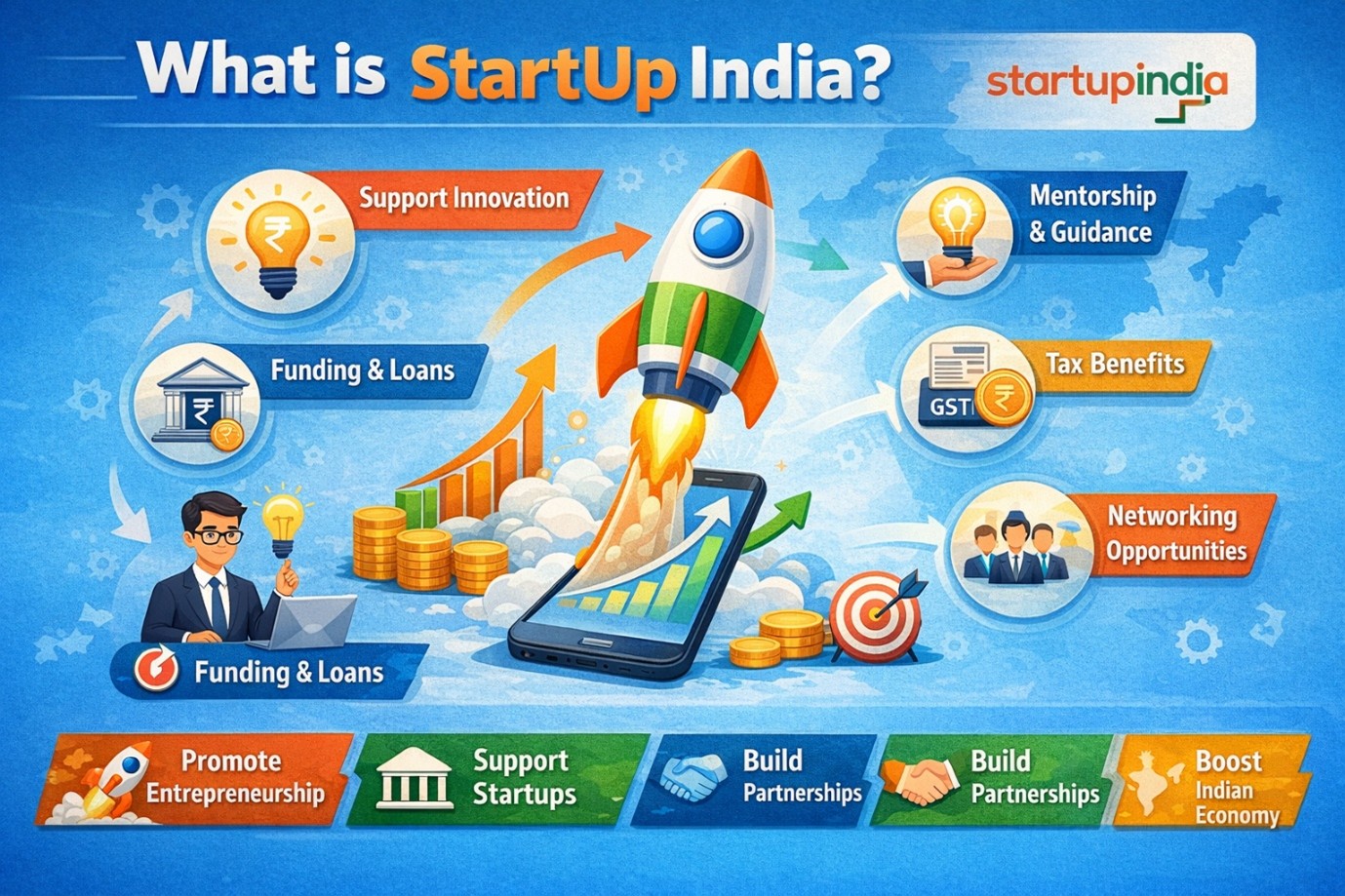
“On January 16, 2016, India decided to stop just watching the future happen and started building it. Startup India isn’t just a government initiative; it is a promise to the dreamers. Managed by the DPIIT, it serves as the wind beneath the wings of anyone brave enough to say, ‘I have an idea.’
By stripping away the heavy chains of red tape, offering financial fuel, and providing guidance from those who have walked the path before, the mission is simple yet profound: To turn a nation of job seekers into a nation of job creators. It’s about ensuring that the next big world-changing idea doesn’t just stay a sketch on a napkin but becomes a reality right here at home.”
What is Startup India Registration?
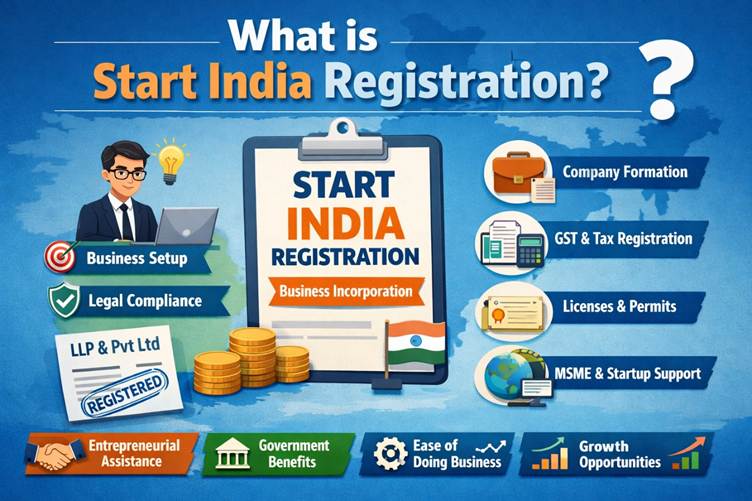
Startup India Registration refers to obtaining DPIIT recognition under the Startup India initiative launched by the Government of India. DPIIT stands for the Department for Promotion of Industry and Internal Trade, which is responsible for recognizing eligible startups under the Startup India program.
The Startup India initiative was launched in 2016 to promote entrepreneurship, innovation, and job creation across the country. The program aims to build a strong startup ecosystem by providing support in areas such as funding, regulatory simplification, tax exemptions, and intellectual property protection.
Many startups evolve through different phases before becoming successful businesses. Understanding the 7 stages of a startup can help founders plan their growth strategy.
Once a startup receives DPIIT recognition, it becomes eligible for several government benefits including:
- Tax exemptions for certain years
- Easier compliance with labour laws
- Access to government funding schemes
- Faster patent and trademark filing
- Networking opportunities with investors and incubators
It is important to understand that Startup India Registration is not the same as company incorporation. Before applying for Startup India recognition, a business must first be registered as a legal entity such as:
- Private Limited Company
- Limited Liability Partnership (LLP)
- Registered Partnership Firm
After incorporation, the startup can apply for DPIIT recognition through the Startup India portal.
Objectives of Startup India
The government isn’t doing this for charity; they want economic growth. Their goals—and your wins—align here:
- Funding: Making it easier to raise capital through government-backed funds.
- Handholding: Connecting you with mentors and incubators.
- Simplification: Letting you self-certify compliance, so inspectors do not harass you.
Who is Eligible for Startup India Registration?
Not every business qualifies as a startup under the Startup India scheme. To obtain DPIIT recognition, your business must satisfy specific eligibility requirements.
1. Company Type
Your business must be registered as one of the following legal entities:
- Private Limited Company
- Limited Liability Partnership (LLP)
- Partnership Firm
Sole proprietorship businesses are not eligible for Startup India recognition.
2. Age of the Startup
The company must be less than 10 years old from the date of incorporation.
If the business has existed for more than ten years, it cannot be classified as a startup under this scheme.
3. Annual Turnover
The annual turnover of the startup should not exceed ₹100 crore in any financial year.
If the turnover crosses this limit, the company will no longer be considered a startup under the Startup India program.
4. Innovation or Scalability
The startup should focus on innovation, development of new products or services, or scalable business models that have the potential for growth and employment generation.
5. Original Business Entity
The startup must not be formed by splitting or restructuring an existing business.
These eligibility conditions ensure that the Startup India scheme supports new and innovative businesses rather than existing companies restructuring themselves.
Who is NOT Eligible for Startup India Registration?
I have seen many founders get rejected for these reasons:
- Sole Proprietorships: This is the big one. If you are a “Proprietorship,” you are out. You must convert to a formal entity first.
- The “Split” Business: You cannot just close your dad’s 20-year-old factory, open a new company with the same machinery, and call it a startup. Reconstructed businesses do not count.
- Subsidiaries: If you are just the Indian office of a foreign giant, you likely will not qualify.
Documents Required for Startup India Registration
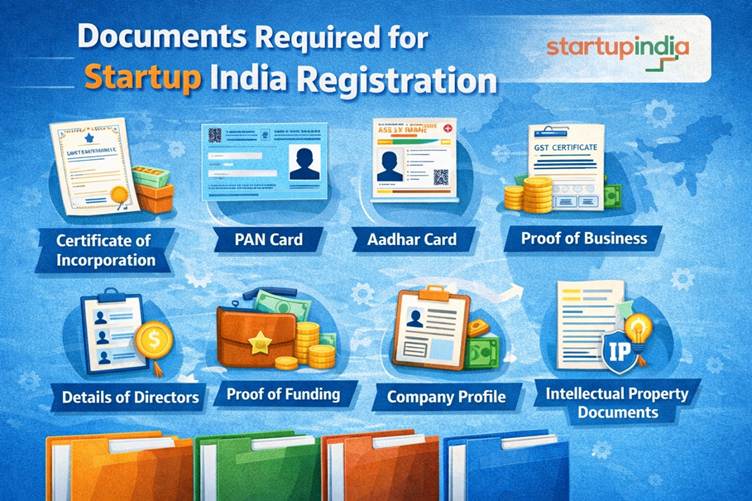
Get these PDFs ready before you start the application to save time:
- Certificate of Incorporation: The birth certificate of your company (from the RoC).
- Director Details: A simple list of names, PANs, emails, and phone numbers of your directors or partners.
- PAN Card: The company’s PAN.
- The “Write-Up”: You will need a pitch deck or a solid write-up explaining what your product is and why it is innovative. (Don’t skip effort here; this is what the officials read to decide if you are worthy of the “Startup” tag).
How much does Startup Registration cost?
- Official Fee: ₹0. The government does not charge a single rupee for this registration.
- Be Careful: There are many private websites that look like the government portal but charge ₹2,000–₹5,000 to fill the form for you. You can easily do it yourself for free.
Startup India Registration Process 2026- Step-by-Step Guide
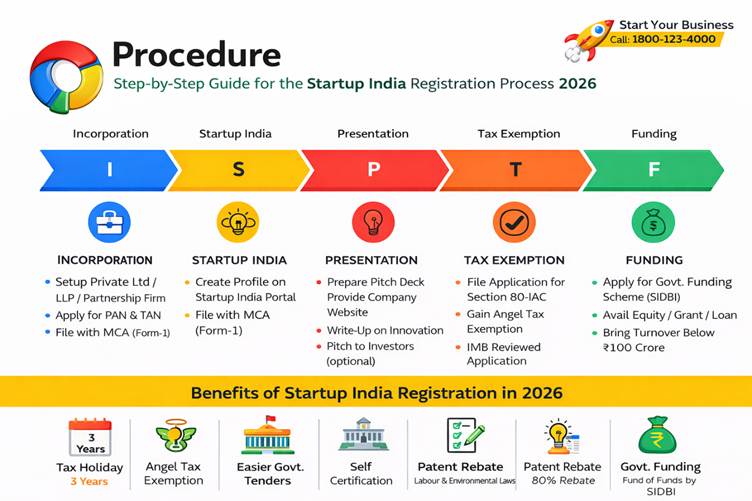
Here is how it works in practice:
- Step 1: Go to startupindia.gov.in. Do not be overwhelmed by the banners; just look for the “Register” button and create a profile.
- Step 2: Once logged in, find the button that says, “Apply for DPIIT Recognition.”
- Step 3: Fill in the basics—your company name, PAN, and date of incorporation.
- Step 4: The Pitch. This is the section where they ask about your “Innovation.” Be descriptive but concise. Focus on the problem you solve.
- Step 5: Upload your documents and hit submit.
- Step 6: Wait. In 2026, the processing is faster than it used to be—usually taking 24 to 72 hours.
Common Mistakes to Avoid During Startup India Registration
Many startup applications are rejected due to avoidable mistakes. Entrepreneurs should be careful about the following issues.
Incomplete Startup Description
Applications with vague or incomplete descriptions may be rejected.
Lack of Innovation
If the business model does not demonstrate innovation or scalability, the application may not qualify for DPIIT recognition.
Incorrect Documents
Submitting incorrect or outdated documents can delay approval.
Misunderstanding Eligibility
Some founders apply even though their company does not meet the eligibility criteria.
By preparing carefully, startups can improve their chances of approval.
Benefits of Startup India Registration
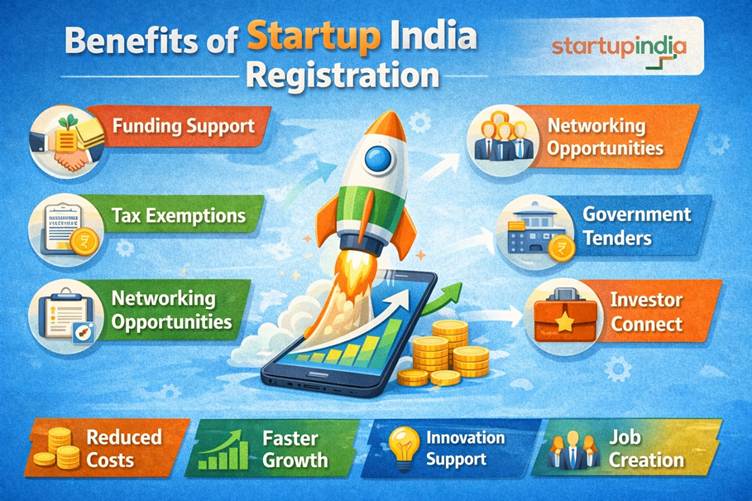
For entrepreneurs who want to build innovative businesses, Startup India registration offers several strategic advantages. Many investors, incubators, and government schemes prefer working with DPIIT-recognized startups because it confirms that the company meets the government’s definition of a startup.
1. Government Recognition
Startup India registration officially recognizes your company as a startup under the Government of India.
2. Tax Benefits
Recognized startups may qualify for tax exemptions under specific conditions.
3. Investor Credibility
Investors often view DPIIT-recognized startups as more credible.
4. Easier Compliance
Startups receive simplified regulatory compliance under certain labour and environmental laws.
5. Networking Opportunities
The Startup India ecosystem connects founders with incubators, mentors, and investors.
Because of these benefits, many entrepreneurs choose to apply for Startup India recognition shortly after incorporating their company.
How to Download Startup India Certificate?
If you get the approval email then:
- Log back into the Startup India portal.
- Go to your dashboard.
- You will see a status change to “Active” or “Recognized.”
- Click Download Certificate.
That PDF is your golden ticket. Keep it safe—you will need to show it to investors, banks, and tax auditors.
FAQs About Startup India Registration
Is Startup India registration free?
Yes, applying for DPIIT recognition through the Startup India portal is free.
How long does Startup India approval take?
In most cases, the approval process takes a few days to a few weeks depending on document verification.
Can a proprietorship apply for Startup India?
No. Only companies, LLPs, or registered partnerships are eligible.
Is Startup India registration mandatory?
No, it is optional, but it helps startups access benefits such as funding, tax relief, and government support.
Final Thoughts
Startup India registration is a valuable opportunity for entrepreneurs who want to build innovative businesses in India. By obtaining DPIIT recognition, startups gain access to government benefits, funding opportunities, tax incentives, and networking support.
For founders looking to grow their startups and attract investors, Startup India recognition can significantly improve credibility and open doors to various support programs.
If you are planning to start a business or scale an existing startup, completing the Startup India registration process is an important step toward building a successful and sustainable venture.
Many early-stage companies also apply for MSME Udyam registration to access additional government benefits and schemes.