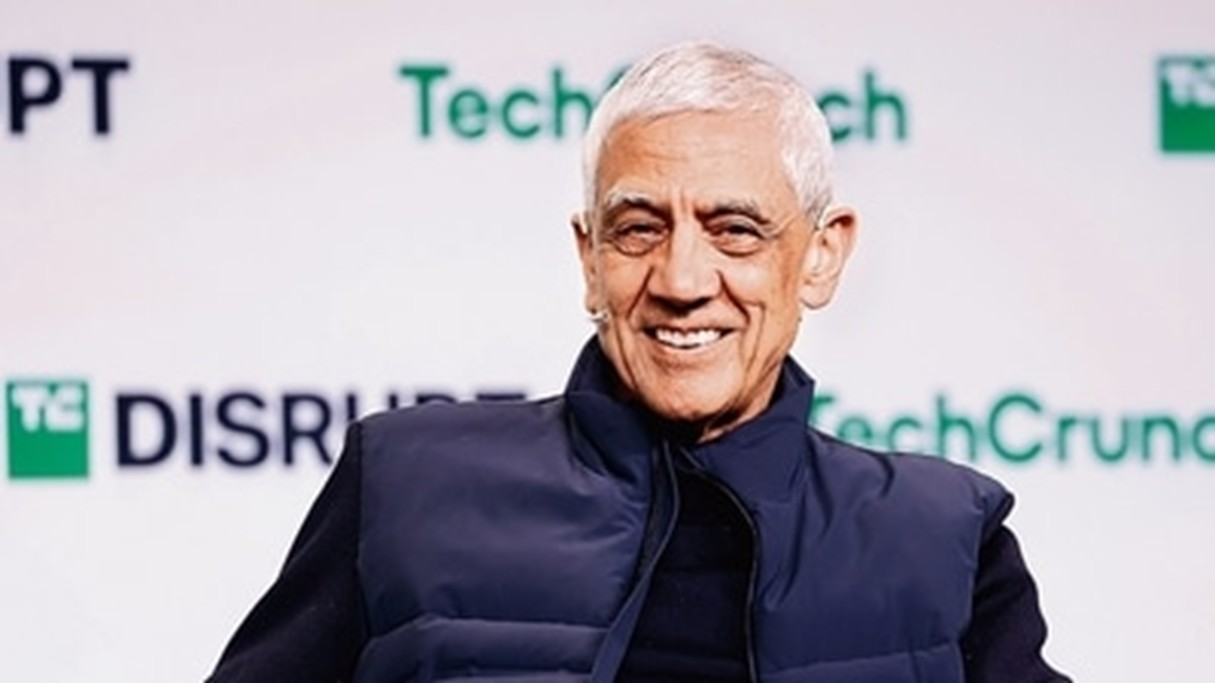
Vinod Khosla isn’t just offering a mild forecast; he is effectively declaring the end of an economic era for India. For decades, the Indian economy has leaned heavily on IT services and Business Process Outsourcing (BPO)—essentially acting as the world’s back office. Khosla’s warning is blunt: that model is on a five-year countdown to extinction.
His argument is that we aren’t just looking at better software; we are looking at AI that creates “human intelligence.” He predicts that within five years, AI won’t just aid workers—it will outperform them. He specifically notes that the current model of selling cheap labour for coding or customer support will collapse because AI will be able to do those jobs nearly for free.
The “Expertise” Bubble Will Burst
It’s not just call centre agents who should be worried. Khosla extended his timeline to 15 years for what he calls “expertise-based” professions. He sees a future where AI workers replace accountants, oncologists, chip designers, and architects.
He describes a two-phase revolution:
- Intellectual Labor: This is happening now. AI interns and assistants will eventually graduate to becoming the doctors and designers themselves.
- Manual Labor: He predicts robotics is trailing about five years behind the AI software boom. Once that matures, physical jobs—from assembly lines to washing dishes—will also be automated, with robot labour costing as little as $2–$3 an hour.
The Silver Lining: A World of “Free” Services
While the job loss predictions are grim, Khosla offers a utopian counter-vision. He argues that this massive automation will lead to a “huge deflationary economy” by 2035.
The logic is simple: if robots and AI are doing the work, the cost of goods and services creates a floor that is near zero. He envisions a world where a top-tier doctor, a tutor, or a lawyer is available to every single Indian citizen essentially for free. The challenge, he admits, shifts from “how do we produce enough?” to “how do we distribute the abundance?” He suggests that governments will need to step in to redistribute these benefits, providing a high standard of living even in a world with fewer traditional jobs.
A Wake-Up Call for India
Khosla’s advice to India is urgent. He believes the country is currently fighting the last war by focusing on education for traditional employment. He argues that India needs to pivot immediately from being a service provider to a product creator.
Instead of 250 million young people looking for IT jobs that won’t exist, he wants them building and exporting AI-based products to the rest of the world. He also stressed the importance of “sovereign AI”—India building its own models (he cited the company Sarvam as an example) rather than relying on US or Chinese technology, which is crucial for national defence and independence.
Political Crossfire
Khosla, a long-time Silicon Valley insider, didn’t hold back on the political climate in the US, critiquing both sides of the aisle:
- On the Left: He criticized the American Left for taking Diversity, Equity, and Inclusion (DEI) initiatives “to extreme levels,” which he believes has caused considerable damage and contributed to a political backlash.
- On Trump: He was equally harsh on Donald Trump, particularly regarding immigration. Khosla argued that Trump’s restrictive policies on H1B visas are “silly” and “naive,” pointing out that immigrants have historically driven US innovation. He sees Trump’s conflation of legal and illegal immigration as a long-term threat to the American economy.
The Geopolitical Race
Finally, he touched on the cold reality of global power. He warned that there are the US and China entirely cornering a real danger of the AI revolution. He pointed out that China made winning the AI race a specific objective of their last five-year plan and is executing on it. His message to India was clear: you have the talent to win this race, but you cannot afford to be a bystander.