Every successful startup begins with a simple, sometimes humble idea and goes through a series of structured phases toward becoming a sustainable business. The understanding of such stages assists entrepreneurs with better planning, attracting investors, and long-term success.
Let’s review the 7 key stages of a startup’s life cycle:
1. Idea & Discovery Stage
This is where everything gets started: a problem is observed by an entrepreneur, who then develops the solution with market potential.
Key Focus:
- Brainstorming on business ideas
- Competitor research
- Target audience identification
- Validating the problem In this case, clarity is more important than perfection.
In this case, entrepreneurs examine the feasibility of their concept within the real market.
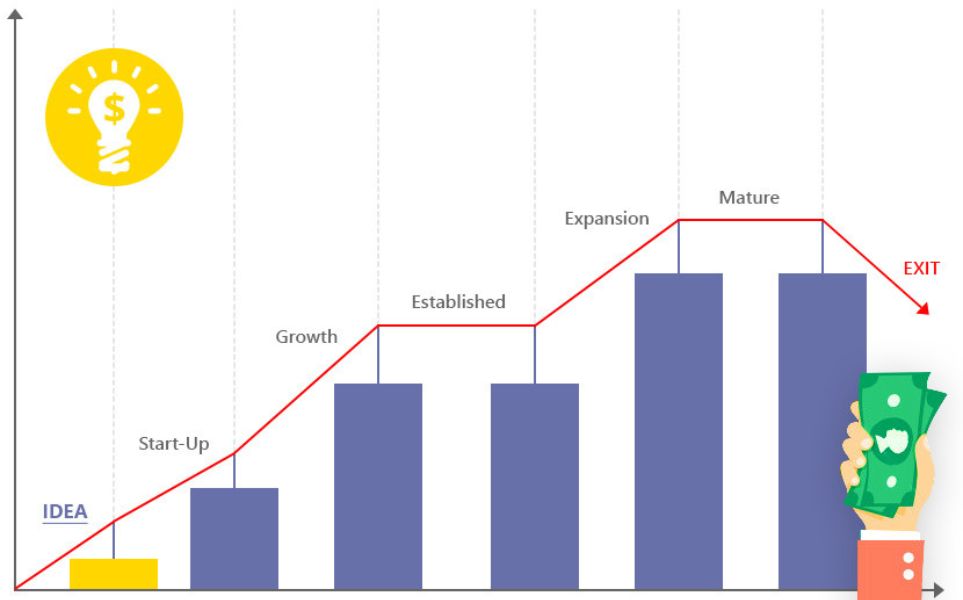
2. Research and Validation Stage
In this case, entrepreneurs examine the feasibility of their concept within the real market.
Key Focus:
- Market Research
- Customer Surveys
- Feasibility Analysis
- Creating Business Models
The goal in this stage is to confirm that people are willing to pay for the solution.
3. Planning & Prototype Stage
After being validated, the startup now establishes the first physical product or service.
Key Focus:
- Developing MVP (Minimum Viable Product)
- Developing Business plans
- Defining Branding
- Financial Forecasting
With In this stage, ideas are given reality.
4. Launch Stage
In this stage the new company emerges in the market and starts its operations.
Key Focus:
- Launching a product
- Marketing and Promotion
- Acquiring early customers
- Collecting feedback
It is the most exciting and risk-taking phase.
5. Growth Stage
In this stage the business now starts to gain momentum and increase its customer base.
Key Focus:
- Scaling operations
- Adding team members
- Increasing Revenue
- Enhancement of the Product Based on Consumer Input
During this phase, startups usually require financing.
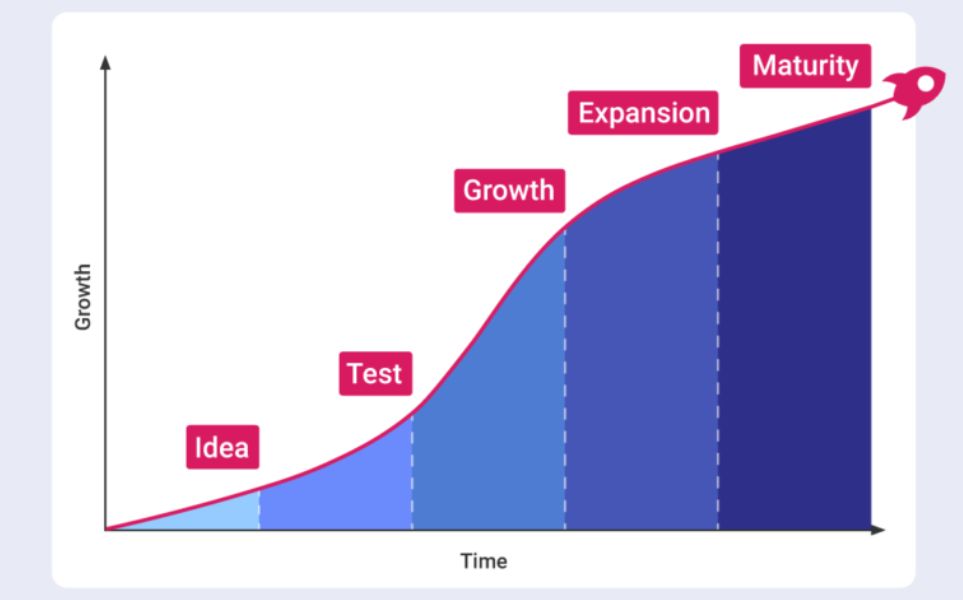
6. Expansion Stage
Now in this stage the startup expands beyond its original market.
Key Focus:
- Entering new markets
- Diversifying products
- Creating Partnerships
- Enhancing Brand Presence
This stage is where the focus is on extending the reach and the profit.
7. Maturity or Exit Stage
In this stage the startup matures into a stable entity, which can either grow on as an established firm or opt for an exit strategy.
Possible Outcomes:
- Acquisition
- IPO
- Merger
- Sustainable Long-Term Operations
This stage indicates the level of success that the startup has achieved and where it is headed.
Final Thoughts
The process of entrepreneurship in the startup company is not instantaneous but involves sequential stages, each filled with experiences of learning, risks, and development. Those who know the stages of startup companies make more educated decisions.