There’s a problem hiding in plain sight inside almost every large enterprise running on the cloud today. And the frustrating part is that the solution already exists — it’s just not being used properly.
Cloud providers like AWS, Google Cloud, and Microsoft Azure have spent billions building sophisticated, deeply capable native security tools directly into their platforms. These aren’t afterthoughts. They’re enterprise-grade, battle-tested security mechanisms that cloud providers developed to protect their own infrastructure and then made available to customers. The catch? Most organisations use only a fraction of what’s available, and even when they do use it, they use it inconsistently — creating dangerous gaps between what their security policy says and what’s actually enforced in practice.
That gap is exactly what an Israeli cybersecurity startup called Native was built to close. And on March 17, 2026, Native announced it had raised $31 million in a Series A funding round to take its solution to the world’s largest enterprises.
The Funding Round — Who’s Behind It
This isn’t a round that came from generalist tech investors who spotted an AI buzzword in a pitch deck. The people backing Native understand cloud security at a level that makes the investment itself meaningful.
Here’s the full breakdown:
- Round size: $31 million Series A
- Lead investor: Ballistic Ventures — one of the most respected dedicated cybersecurity venture funds in the world
- Participating investors: General Catalyst, YL Ventures, and Merlin Ventures (all returning from the seed round, where they collectively invested $11 million near the company’s founding)
- Total funding raised to date: $42 million
- Announcement date: March 17, 2026
- New board addition: Phil Venables, former Chief Information Security Officer of Google Cloud — now a partner at Ballistic Ventures — has joined Native’s board of directors
That last point deserves more attention than a bullet point usually gets. Phil Venables isn’t just a name. He is one of the most credentialed cloud security executives on the planet. When someone who held the CISO role at Google Cloud joins your board, it sends an unmistakable signal to every enterprise CISO in the market — this startup is serious, and the problem it’s solving is real.
The Founders — Built by the People Who Understood the Problem First
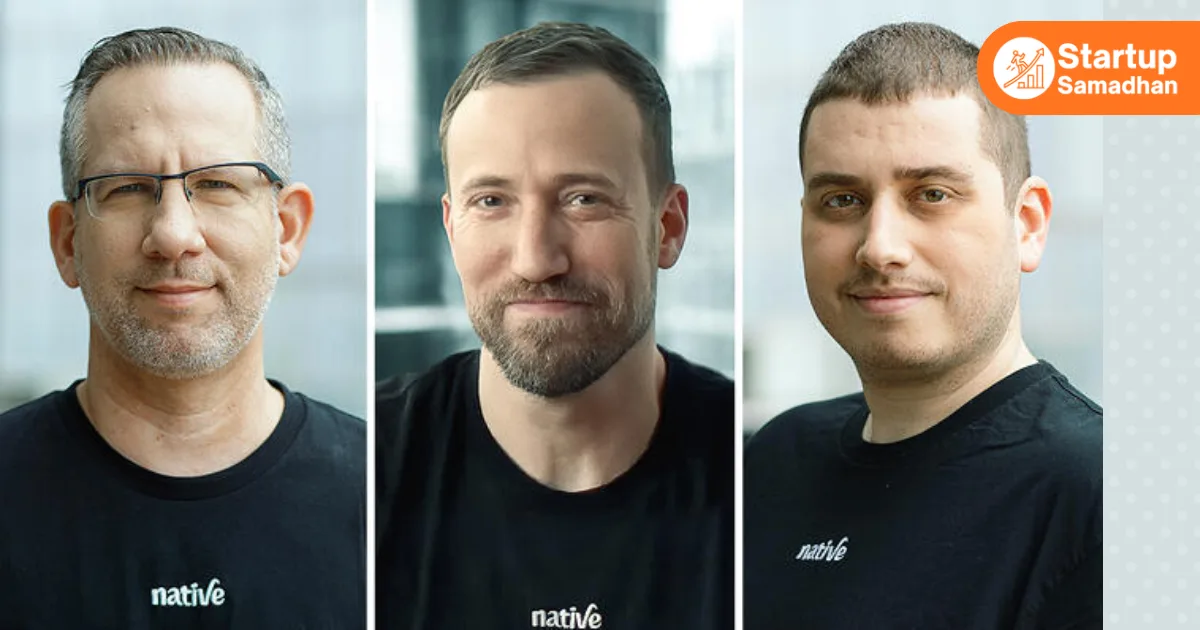
Native was founded in 2024 by three people who spent years building the very cloud security systems that enterprises were failing to fully use. Their backgrounds aren’t from the outside looking in — they were literally inside the machine.
- Amit Megiddo, CEO — Previously a Product Lead for Amazon GuardDuty at Amazon Web Services. GuardDuty is AWS’s flagship threat detection service, used by millions of organisations globally. Megiddo spent years watching enterprises struggle to utilise it fully
- Gal Ordo, CPO — Previously a Product Lead at AWS Security, working on the design and delivery of AWS’s own security products
- Eyal Faingold, CTO — Previously VP of Cloud Security at Check Point Software, one of the oldest and most respected names in the cybersecurity industry
The founding team’s credentials are unusually well-matched to the specific problem they’re solving. They didn’t read about multi-cloud security complexity in a market research report — they lived it from the inside, watched enterprises fail to implement their own tools correctly, and decided to build the fix themselves.
The Problem Native Is Solving — And Why It’s Harder Than It Sounds
To understand why Native raised $31 million in a market where funding is highly selective, you need to understand the problem it’s actually solving — because it’s less obvious than it might seem.
When a company moves to the cloud, it typically doesn’t just pick one provider. Most large enterprises today run on what’s called a multi-cloud environment — using AWS for some workloads, Google Cloud for others, Azure for yet others, and increasingly Oracle Cloud as well. Each of these providers has its own security model, its own identity management system, its own policy language, and its own enforcement mechanisms. None of them speak exactly the same language.
The result is a situation where:
- Security policies exist on paper — but translating them into actual configurations across four different cloud platforms requires deep expertise in each one
- Misconfigurations are common and dangerous — most major cloud security breaches are not the result of hackers breaking through sophisticated defences; they’re the result of misconfigured settings that left doors open
- Security teams are overwhelmed — keeping up with the pace of change in cloud infrastructure, combined with the constant evolution of threats, means teams are perpetually behind
- Native security tools go underused — the very capabilities built into AWS, GCP, Azure, and Oracle to protect organisations are sitting dormant or partially implemented because nobody has the bandwidth or expertise to configure them optimally across all platforms simultaneously
This is the gap Native targets. Not by adding yet another monitoring layer that alerts when something goes wrong — but by acting as a central control and enforcement layer that translates security policy intent into correctly configured, vendor-specific implementations across every cloud environment the organisation runs on.
How Native’s Platform Actually Works
The elegance of what Native has built is that it doesn’t try to replace what cloud providers have already built. It makes those existing capabilities actually work as intended.
Here’s how the platform functions in practice:
- Policy definition: Security teams define what they want their security posture to look like — in plain policy language, not in the specific syntax of each cloud provider
- Automatic translation: Native’s platform takes those policies and automatically translates them into the correct vendor-specific configurations for AWS, Google Cloud, Azure, and Oracle Cloud
- Enforcement: The platform then enforces those configurations using each cloud provider’s own native enforcement mechanisms — not an external monitoring tool bolted on top
- Simulation before deployment: Before any policy change goes live, security teams can simulate its impact, testing for unintended consequences without risking business disruption
- Phased rollout and approvals: Built-in approval workflows and staged deployment capabilities allow changes to be implemented gradually, reducing the risk of a misconfiguration taking down a critical business system
- Continuous consistency: As cloud environments evolve and new resources are added, Native keeps security policy aligned automatically rather than requiring manual reconfiguration each time
The CEO Amit Megiddo described it concisely: their platform takes a company’s security intent and turns it into enforceable configurations. That sounds simple but doing it reliably across four major cloud providers simultaneously is genuinely hard engineering — which is part of why this problem has remained unsolved for so long.
The Advisors Backing Native’s Vision
Beyond the investors, the advisory bench around Native reads like a who’s who of cybersecurity’s most consequential builders:
- Zohar Alon — Founder of Dome9, a cloud security company acquired by Check Point Software. He’s been through exactly the journey Native is attempting, at a time when cloud security was far less mature
- Doug Merritt — CEO of Aviatrix and former CEO of Splunk. He understands enterprise security infrastructure at massive scale from both the networking and data analytics sides
- Udi Mokady — Founder of CyberArk, one of the most respected and enduring Israeli cybersecurity companies, globally recognised for its privileged access management solutions
When founders of companies like Dome9 and CyberArk are advising you, and the ex-CISO of Google Cloud is sitting on your board, you have a genuine signal that the people who understand this space most deeply believe in what you’re building.
The Clients and the Scale Ahead
Native is already working with Fortune 100 organisations across the finance, technology, and media sectors — three of the industries where multi-cloud complexity and regulatory pressure around security are most acute. These aren’t pilot customers being given free access; they’re some of the most security-conscious enterprise buyers in the world.
The team currently stands at 41 employees spread across Israel, the UK, and the United States, with a clear plan to scale to approximately 90 employees by the end of 2026. That’s a roughly 120% headcount expansion in under 12 months — and given the enterprise sales motion required to serve Fortune 100 clients, most of that growth will likely go into solutions engineering, customer success, and sales roles in the US and UK markets.
Why This Raise Matters Beyond Israel
Israel has a long-established reputation as one of the world’s leading cybersecurity ecosystems — producing companies like CyberArk, Check Point, Wiz, and Aqua Security that have shaped how the entire industry thinks about cloud and enterprise security. Native fits squarely within that lineage.
But this story is also relevant globally, including for Indian enterprises that are rapidly expanding their multi-cloud footprints. As Indian banks, insurance companies, manufacturing giants, and technology enterprises accelerate their cloud adoption — often running across AWS and Azure simultaneously — the problem of inconsistent security policy enforcement is not a distant Western concern. It is arriving here, now, at scale.
A platform that makes cloud security consistently enforceable across providers, without requiring armies of cloud-specific experts for each platform, is the kind of tool that CISOs at Infosys, Wipro, TCS, HDFC, or any large public-sector enterprise would be watching closely.
Quick Facts at a Glance
- Startup: Native
- Founded: 2024
- Headquarters: Israel (with teams in UK and US)
- Founders: Amit Megiddo (CEO, ex-AWS GuardDuty), Gal Ordo (CPO, ex-AWS Security), Eyal Faingold (CTO, ex-Check Point)
- Funding announced: March 17, 2026
- Series A amount: $31 million
- Lead investor: Ballistic Ventures
- Co-investors: General Catalyst, YL Ventures, Merlin Ventures
- Total raised to date: $42 million
- New board member: Phil Venables, ex-CISO Google Cloud
- Key advisors: Zohar Alon (Dome9 founder), Doug Merritt (ex-CEO Splunk), Udi Mokady (CyberArk founder)
- Current team size: 41 employees
- Target team size by end-2026: ~90 employees
- What the platform does: Translates security policies into enforceable multi-cloud configurations using native cloud provider mechanisms
- Cloud platforms supported: AWS, Google Cloud, Azure, Oracle Cloud
- Early clients: Fortune 100 companies in finance, tech, and media