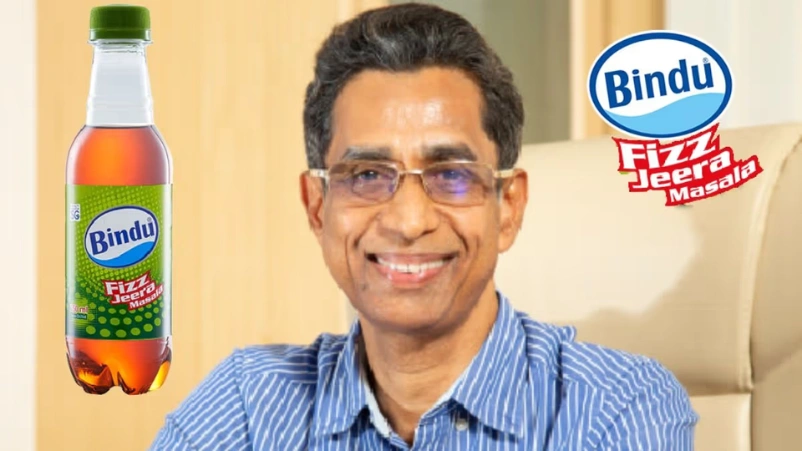
The next time you crack open a bottle of Bindu Jeera Fizz Masala, know this: that fizz is decades of grit, failure, and relentless belief in a single idea — and it was poured into existence by a Class 12 dropout who once drove an auto on Bengaluru’s streets.
This is not a startup fairy tale. This is the real thing.
The Auto Driver With Ambitions Too Big for the Seat
Sathya Shankar was born in 1964 in Bellare village in Karnataka, the third son of a farmer. He dropped out after Class 12 and applied for an autorickshaw license, taking a bank loan to buy his first auto.
But even behind the wheel of that auto, Shankar’s mind was elsewhere.
Deeply influenced by the success of Dhirubhai Ambani, Shankar harboured ambitions far beyond what his circumstances suggested were possible.
In just one year of driving, he paid off his auto loan entirely — a signal of the financial discipline that would later define his entire business empire.
He then graduated from the auto to an Ambassador car, expanded into automobile spare parts retail, and then spotted an entirely new opportunity — finance.
Building the Foundation: Praveen Capital
Running an automobile shop taught Shankar something most business school graduates never learn firsthand: the power of credit.
It was while running the automobile shop that he learnt the nuances of finance management. Customers would buy parts on credit and pay later in instalments. He used that experience to start an automobile finance company. In 1994, he started Praveen Capital and lent money at a small interest. What set Praveen Capital apart was that it provided loans to buy second-hand vehicles, and not just new vehicles.
That was a market gap no one else had bothered to fill. And it became a ₹240 crore business.
Today, Praveen Capital contributes Rs. 240 crore to the Group’s total revenue.
One business. Built from street-level insight. No MBA required.
Water Before the Fizz: The Bindu Mineral Water Era
Shankar had always dreamed of making something tangible — a product people could hold, drink, and remember.
In 2000, Sathya started his packaged drinking water company, Bindu — which means “drop” in Kannada. To set up the factory, he chose the Narimogeru area near Puttur, Karnataka. He had two thoughts behind this decision: Puttur receives steady rainfall ensuring a reliable water supply, and he wanted to generate jobs for migrants who came to the state in search of work.
A brand born from a word meaning “drop.” A factory location chosen not just for profit, but for community. That’s the Shankar way.
The Idea That Changed Everything: A Street Stall in North India
What is the origin story of Bindu Jeera Fizz Masala? A chance observation on a trip.
Back in 2002, when Sathya visited North India, he came across a soda-selling shop where the seller was adding jeera powder and salt to a drink. This gave Sathya the idea that if the same drink could be made with a twist, it could become a very good product. And thus, the idea gave birth to Bindu Fizz Jeera Masala.
Simple. Brilliant. Indian.
He recognised that Indian consumers have a strong preference for traditional flavours and leveraged this insight by infusing the distinctive tastes of jeera — cumin — and masala into a sparkling soda. This refreshing blend resonated with consumers, quickly elevating Bindu Jeera to the status of a household name.
When 100 Cases Came Back Unsold
But success didn’t come immediately. Not even close.
The drink did not find many takers initially. “We used to send 200 cases of the drink for sale, but 100 cases would come back unsold,” says Shankar. But he was not one to lose hope. “People were bored of drinking Pepsi and Coke and they wanted something new,” he says. “I knew that jeera masala would become a hit one day.”
In the early stages, Sathya faced several hurdles — limited market awareness and intense competition from established cola brands. Detractors, including some of his sales partners, urged him to pivot towards producing drinks similar to cola or orange beverages, advising him to abandon the idea of a jeera-infused soda.
He refused. He didn’t pivot. He doubled down.
Sathya launched his product without a dedicated marketing budget, relying instead on word-of-mouth publicity and a clever strategy of offering complimentary drinks to intrigued customers.
No ads. No influencers. Just a product so good it sold itself — eventually.
The Numbers That Tell the Story
The growth of Bindu Jeera Fizz Masala reads like a textbook on patient compounding:
With a small initial investment of Rs. 35 lakhs in 2001, Shankar’s business SG Corporates saw rapid expansion. The turnover reached Rs. 6 crore by 2006, and the growth trajectory kept going higher. When SG Corporates’ revenue surpassed Rs. 100 crore in 2010, it was a significant milestone.
| Year | Milestone |
| 2001 | Started with Rs. 35 lakh capital |
| 2002 | Launched Bindu Fizz Jeera Masala |
| 2006 | Turnover hits Rs. 6 crore |
| 2010 | Revenue crosses Rs. 100 crore |
| 2015 | Begins international exports |
| 2018 | Named “Emerging Entrepreneur of the Year” by Times of India |
| 2024 | Annual turnover touches Rs. 800 crore |
Going Global, Staying Desi
Jeera soda began a new chapter in 2015 when it expanded into foreign markets and began exporting to nations including Malaysia, Singapore, and the United Arab Emirates.
As of November 2024, Bindu Jeera has established a global presence, extending its reach to over 15 countries. The company has also expanded its manufacturing operations with two facilities in Chennai, Tamil Nadu, and Hyderabad, Telangana, and is in the process of setting up a third facility in Bengaluru, Karnataka.
A cumin-spiced drink from a Karnataka village is now quenching thirsts across the world. Let that sink in.
The Empire Today: Beyond Just a Fizzy Drink
SG Corporates is no longer just a beverage company.
In 2003, Sathya established Megha Fruit Processing, a company with a strength of 2,000 employees. The company manufactures ready-to-serve beverages, packaged drinking water, pulp-mixed soft drinks, fruit drinks, potato chips, and other namkeen packaged food products.
With 20+ warehouses, 1,500+ distributors, and a retail footprint spanning over 2,00,000 active outlets, SG Corporates has built one of South India’s most agile and responsive FMCG supply chains.
From 15 employees at the start to 2,500 direct and nearly 8,000 indirect employees today, SG Corporates has built more than just a brand — it has built livelihoods, with a special emphasis on providing equal opportunities for women in its workforce.
What’s Next: The ₹1,000 Crore Target
Shankar isn’t done yet.
SG Corporates has set an audacious revenue goal of ₹1,000 crore, driven by pan-India penetration of its ethnic-flavoured carbonated beverages and juices in the next 3 years. Riding on the strong consumer shift towards regional flavours and nostalgia-driven consumption, the brand is positioned to leverage its deep South Indian success into a nationwide narrative.
The Indian ethnic beverage market is at an inflection point, with a market valuation of USD 2.02 billion in 2023 and a projected CAGR of 7.7% through 2030, creating a massive whitespace for brands that offer authentic, flavour-rich, homegrown options.
Key Facts — Sathya Shankar & Bindu Jeera
| Detail | Info |
| Founder | Sathya Shankar |
| Hometown | Bellare village, Puttur, Karnataka |
| Education | Class 12 Dropout |
| Started As | Auto-Rickshaw Driver |
| Brand | Bindu Fizz Jeera Masala |
| Company | SG Corporates / Megha Fruit Processing |
| Founded | 2001 (SG Corporates) |
| Jeera Soda Launch | 2002 |
| Annual Revenue | Rs. 800 crore (FY 2024) |
| Countries Reached | 15+ |
| Employees | 2,500 direct / 8,000 indirect |
| Retail Outlets | 2,00,000+ |
| Target | Rs. 1,000 crore revenue |
The Lesson Every Aspiring Entrepreneur Must Take From This
A product’s popularity can be gauged from the number of clones it spawns — but none of the clones were a patch on Bindu Fizz Jeera Masala, as it was hard to replicate its secret recipe. Its popularity was organic — except for a few ads painted on walls bordering highways, its publicity was largely by word of mouth. Its unique flavour is its USP.
Sathya Shankar didn’t have a famous family name, a top college degree, or venture capital. He had a keen eye, an iron will, and a bottle of cumin soda that half the market didn’t want at first.
Today, he drives a Rolls Royce Phantom. The auto is long behind him — but the hustle never left.