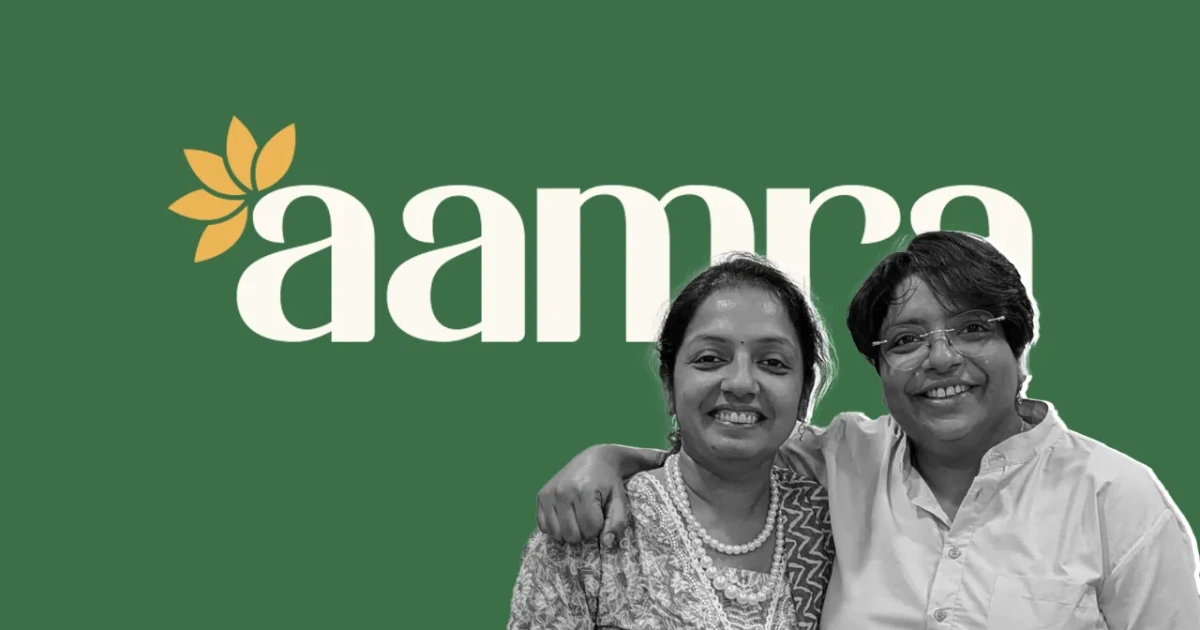
The Founding Story — Two Women Who Saw the Same Problem From Different Angles
The most compelling origin stories tend to come from founders who didn’t decide to enter a market because of a slide deck — but because they personally couldn’t find what they were looking for. Aamra Seniors Club has exactly that kind of founding story.
Sripriya Yegneswaran searched for something for her parent after he returned to India — a structured, engaging community space for seniors who were healthy and independent but needed more than home offered. She found nothing. There were old-age homes, which felt final and institutional. There were hobby clubs, which lacked continuity and care. There were hospitals and clinics, but no spaces for seniors who were not unwell — revealing a missing middle in senior living between home and institutions. That absence stayed with her.
Around the same time, Akanksha Saxena, a head and neck oncologist, was seeing a different version of the same problem from inside hospital corridors. Older patients struggling with medication management. Early signs of deterioration that could have been prevented. Falls that changed lives overnight. Most importantly, a lack of everyday support systems once patients went back home — highlighting gaps in how senior living is supported beyond medical settings.
Two perspectives — one from a family caregiver looking for a solution and one from a physician watching preventable decline happen in slow motion — converged into a single company. Aamra Seniors Club was founded in 2025 by Sripriya Yegneswaran and Dr. Akanksha Saxena. The company operates as a unit of Kinspire Living Pvt. Ltd., and its first centre is located in DLF Phase 1, Gurugram.
What Aamra Actually Does — The Model Explained
Aamra is not a nursing home. It’s not a hospital outpost. It’s not a yoga class that happens on Thursday mornings. It is something India has almost no word for yet — a senior day club — a structured, medically informed, community-based space where older adults spend part of their day engaged, monitored, and genuinely connected.
The club operates under the direct medical guidance of Dr. Akanksha Saxena. The staff is trained to monitor vitals and recognise early warning signs of health issues, acting as an “early warning system” for families.
Here’s what a typical session at Aamra looks like:
- Gentle movement sessions: Designed to improve balance, strength, and coordination — and critically, to prevent falls, which are one of the leading causes of sudden health deterioration in elderly individuals
- Cognitive games and mental stimulation: Activities specifically designed to keep the mind sharp and build resilience against memory decline
- Social hour: Tea, snacks, and structured conversation — addressing the isolation that urban high-rise living creates for seniors whose children are away at work for ten hours a day
- Creative expression: Music, art, guest speakers, and other activities that give seniors a sense of purpose and enjoyment beyond passive television viewing
The club operates Monday to Friday with two convenient slots — Morning: 10:00 AM to 1:00 PM, and Afternoon: 2:30 PM to 5:30 PM. Flexible monthly and quarterly memberships are offered to suit different families’ schedules.
For families where logistics are a concern, Aamra offers a reliable pickup and drop-off service across key areas in Gurgaon, designed to be comfortable and punctual for seniors and worry-free for working caregivers.
One of the most striking things about the Aamra model is something the founders call the Family Portal — a platform through which families receive regular updates about their parent’s participation, new friendships made, and any observations about physical or emotional health. For a child managing their parent’s wellbeing from across town — or from another country — this kind of visibility is not just reassuring, it’s transformative.
The CARE Protocol — The Science Behind the Service
Aamra is developing what it calls the Aamra CARE protocol — a framework aimed at assessing and tracking physical stability, cognitive engagement, and social connectedness among seniors.
This is where the startup moves beyond being a pleasant community space and into being a genuine preventive healthcare intervention. The CARE framework essentially gives each senior member a structured baseline — and then tracks changes in that baseline over time. A drop in physical stability metrics might flag an elevated fall risk. A change in social engagement patterns might indicate emerging depression or isolation. Cognitive performance benchmarks, tracked consistently, can catch early signs of deterioration months before a clinical diagnosis would arrive.
The founder’s background shapes this entirely. Dr. Akanksha Saxena, practicing as a physician in Gurugram, sees a distinct pattern in older patients — they are not just battling diabetes or hypertension, they are battling an ecosystem of fast-paced urban sprawl. Unlike traditional neighbourhoods where seniors sat on verandahs and chatted with neighbours, Gurgaon’s vertical living creates silos.
The CARE protocol is Aamra’s answer to that silo problem — a systematic, medically grounded approach to keeping seniors connected, active, and cognitively engaged before isolation and inactivity compound into clinical deterioration.
The Number That Speaks for Itself — 90% Member Retention
For a pre-seed startup operating its first centre, the most important metric isn’t how much they raised. It’s whether the product actually works and whether people keep coming back.
Aamra claims to have recorded over 90% member retention at its centre, indicating continued participation among users.
In a sector where the default experience for seniors is either passive or temporary, a 90% retention rate is striking. It suggests that members aren’t just trying the club and drifting away — they are building the habit of showing up, forming genuine connections, and finding the experience valuable enough to continue week after week.
For investors evaluating eldercare startups, this is the number that matters most. Willingness to pay is important. But a senior who returns to the same space consistently — and keeps their membership current — is a signal that the product is addressing something real, not just filling a few morning hours.
Where the $150,000 Goes — The Three Priorities
The pre-seed capital has been earmarked for three clear areas:
- Strengthening product-market fit: Refining the programming, protocols, and membership model based on what’s working at the Gurugram centre and what needs adjustment before scaling
- Building the preventive ageing framework: Developing and validating the CARE protocol with more rigour — creating the standardised assessment tools, tracking systems, and health monitoring workflows that will define Aamra’s clinical differentiation
- Expanding senior engagement centres: Opening additional centres in key urban markets — Gurugram’s DLF Phase 1 is the proof point, and the next phase of capital is about proving the model replicates across neighbourhoods and cities
The startup plans to utilise the fresh capital to strengthen its product offerings and expand into key urban markets. A significant portion of the funds will be invested in developing a structured preventive ageing framework, which is central to its business model.
The Market Aamra Is Entering — And Why the Timing Is Right
The business case for elder care in India is no longer about projections on a slide deck. It’s about demographic reality that is already here and accelerating fast.
India’s elderly population — those aged 60 and above — currently stands at over 150 million and is projected to cross 300 million by 2050. Urban India’s nuclear family structure means that the traditional joint family support system, which historically absorbed elder care, is no longer reliably available. Working children in cities like Gurugram, Bengaluru, and Mumbai are genuinely unable to provide the kind of daily engagement and monitoring that aging parents need — not because they don’t care, but because the structure of modern urban work life simply doesn’t accommodate it.
With nuclear families becoming more common in urban India, the demand for organised eldercare services is rising steadily. Aamra aims to address this gap through its holistic approach. The funding highlights increasing investor interest in India’s eldercare segment, driven by demographic changes and longer life expectancy. Startups like Aamra Seniors Club are exploring preventive and community-led models that go beyond traditional care.
What makes Aamra’s positioning specifically interesting is the segment it targets. Most Indian eldercare businesses focus on two extremes — crisis management (nursing, hospitalisation, intensive care) or basic recreation (hobby classes, senior tours). Aamra targets the vast middle — independent, cognitively intact seniors between roughly 65 and 80 who need structure, stimulation, social connection, and gentle monitoring, but not clinical intervention. This segment is enormous in urban India and almost completely unaddressed by organised services.
The Founders — Why This Team Has the Right Ingredients
Building a healthcare-adjacent business requires a combination of clinical credibility and operational sensibility that most founding teams don’t naturally have. Aamra’s founding pair covers both sides of that equation.
Sripriya Yegneswaran brings the user perspective — the family caregiver who experienced the gap firsthand and went looking for a solution. That lived experience gives her a clarity of vision about what the product needs to feel like for the families it serves, not just for the seniors themselves. The caregiver — the working son or daughter who needs to feel confident about where their parent is spending the day — is as much Aamra’s customer as the senior member.
Dr. Akanksha Saxena brings the clinical credibility that gives the model its differentiation. As a doctor practicing in Gurugram, Dr. Saxena directly guides the medical protocols at Aamra — ensuring that the centre isn’t just a pleasant way to spend the morning, but a genuinely monitored, health-conscious environment with trained staff who know what to watch for and when to escalate.
The combination of a driven non-medical co-founder who deeply understands the family’s emotional and logistical needs, and a physician co-founder who brings clinical structure and credibility — is exactly the founding team this kind of business requires.
Why This Matters for Indian Startup Ecosystem Watchers
Aamra Seniors Club is a $150K pre-seed. In a week where Indian startups collectively raised $228 million, it’s one of the smallest announcements by dollar value. But size of round is not always the most meaningful signal about a company’s importance.
What Aamra represents is an approach to elder care that is fundamentally different from how the sector has been approached before — not as a charity or a government programme, but as a premium, structured, medically credible consumer product that families in urban India are willing to pay for because it solves a problem they feel acutely and cannot solve themselves.
The 90% retention rate at a single-centre, pre-series startup is the kind of early evidence that makes investors pay attention to subsequent rounds. The CARE protocol gives it a clinical differentiation story that generic day-activity centres cannot replicate. And the demographic tailwind behind the entire sector is as reliable as any in the Indian economy.
Watch this one.
Quick Facts at a Glance
- Company: Aamra Seniors Club (unit of Kinspire Living Pvt. Ltd.)
- Founded: 2025
- Headquarters: Gurugram, Haryana
- Co-founders: Sripriya Yegneswaran and Dr. Akanksha Saxena (Head and Neck Oncologist)
- Funding announced: March 20, 2026
- Round: Pre-Seed
- Amount raised: $150,000 (approximately ₹1.2 crore)
- Investors: Group of angel investors
- Current operations: First centre at DLF Phase 1, Gurugram
- Centre timings: Monday to Friday | Morning: 10:00 AM – 1:00 PM | Afternoon: 2:30 PM – 5:30 PM
- Key metric: 90%+ member retention at current centre
- Product: Senior day club — structured physical, cognitive, and social engagement programmes for independent seniors
- Signature initiative: Aamra CARE protocol — framework for tracking physical stability, cognitive engagement, and social connectedness
- Use of funds: Product-market fit strengthening, preventive ageing framework development, senior engagement centre expansion
- Target demographic: Independent urban seniors aged 60–80 who are not clinically unwell but need daily structure, stimulation, monitoring, and connection
- Differentiation: Doctor-led operations, family portal updates, medically structured protocols, transport services, complimentary trial day