
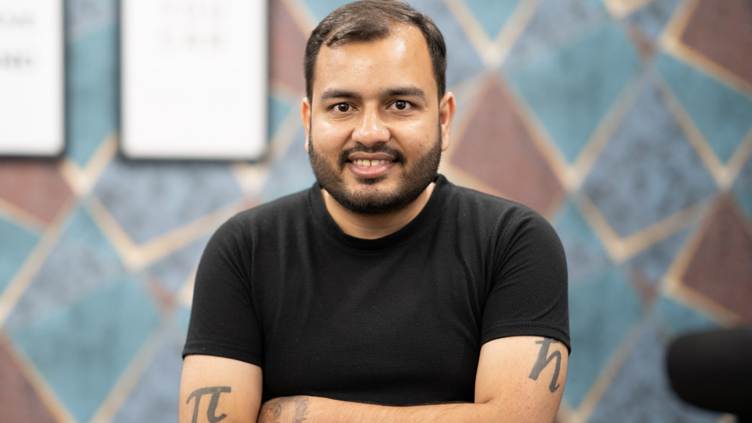
Quick Facts — Alakh Pandey and PhysicsWallah at a Glance
- Full name: Alakh Pandey
- Born: October 2, 1991, Prayagraj (Allahabad), Uttar Pradesh
- School: Bishop Johnson School & College, Allahabad
- College: Harcourt Butler Technical University, Kanpur — B.Tech Mechanical Engineering, dropped out in third/fourth year
- YouTube channel launched: January 28, 2014
- Company co-founded: PhysicsWallah (2020) with Prateek Boob
- Company headquarters: Noida, Uttar Pradesh
- Unicorn status achieved: 2022 — India’s 100th unicorn, $1.1 billion valuation
- IPO date: November 11–13, 2025
- IPO price band: ₹103–₹109 per share
- IPO listing price: ₹143.10 (31–33% premium)
- Market cap at listing: ~₹44,382 crore
- Forbes 2026 global rank: 3,332
- Forbes 2026 net worth: Over $1 billion
- Hurun India 2025 net worth: ₹14,520 crore (wealth grew 223%)
- YouTube subscribers: 14 million+ (Physics Wallah main channel)
- FY25 revenue: ₹2,886 crore (up from ₹1,940 crore)
- FY25 net loss: ₹243 crore (down from ₹1,131 crore — rapidly improving)
- Acquisition offers rejected: ₹75 crore (Unacademy) + separate ₹40 crore offer — both declined
- Courses offered: JEE, NEET, CBSE, AI, data analytics, software development, banking exams
- Key philosophy: Quality education at prices that don’t exclude the students who need it most
The Beginning — A Family That Knew What Struggle Felt Like
Alakh Pandey was born on October 2, 1991, in Allahabad (now Prayagraj), Uttar Pradesh, into a lower-middle-class family. His father Satish Pandey was a private contractor, and his mother Rajat Pandey was a teacher. From an early age, Alakh saw financial crisis quite closely and understood the importance of money in a way most children don’t have to.
The family’s situation progressively worsened during his childhood years. From seeing his father sell a portion of their house to meet daily expenses, and eventually selling the entire house, the family shifted to a rented apartment in a slum area.
In a story full of dramatic turning points, this is perhaps the most foundational one. Growing up watching your father dismantle the family home piece by piece to pay for groceries doesn’t just shape your work ethic — it shapes your entire relationship with money, security, and the kind of future you decide to fight for.
When he was just in Class 6, Alakh started giving tuition to his classmates and juniors. He used to travel five kilometres daily to teach students who paid him. He was earning ₹200 from his tuitions and continued teaching kids until he left school.
Two hundred rupees. From a Class 6 student who understood something that most of India’s education industry would figure out a decade later — that a teacher who actually cares, actually explains, and actually makes you understand is worth paying for.
The Detour — Engineering That Wasn’t Meant to Be
After finishing school, Alakh attempted the IIT-JEE — India’s most brutal engineering entrance examination. He didn’t crack it. He then appeared in the Uttar Pradesh State Combined Entrance Examination (UPSCEE), secured an impressive rank, and was admitted to Harcourt Butler Technical Institute in Kanpur to pursue B.Tech in Mechanical Engineering.
He left college in his third year, after realising that this was not his true passion.
That moment — choosing to walk away from an engineering degree at Harcourt Butler, in a family that had sold its house and was living on rent, with no financial safety net, no established career plan, and no backup — is the kind of decision that most people talk about admiring and very few people actually make.
When Alakh decided to drop out in his fourth year, many people tried to stop him, but he had made up his mind and believed in his vision. He returned to his hometown in Prayagraj and decided to open a YouTube channel.
The channel had a name that was simultaneously practical and personal: Physics Wallah.
The YouTube Years — Building an Audience Before Anyone Believed in It
According to YouTube, Alakh Pandey opened his YouTube channel on January 28, 2014, under the name Physics Wallah.
The content was simple, direct, and unlike almost anything else available on the internet for Indian students at that time. No expensive production. No polished sets. No corporate sponsorships. Just a teacher who could explain electromagnetic induction, projectile motion, and organic chemistry reactions in the kind of language that a student from Prayagraj or Muzaffarpur could actually understand — without feeling like the explanation was written for someone from a different country.
In 2016, he launched a more active version of the YouTube channel, aimed at teaching physics for JEE, NEET, and CBSE board examinations. As the channel began to gain more viewership, Pandey also started posting chemistry content.
The channel grew because it solved a real problem — not for the IIT aspirant in South Delhi whose parents could pay ₹2 lakh for Kota coaching, but for the student in a small town or a lower-middle-class household who was genuinely smart but couldn’t access quality teaching. Those students don’t just watch — they tell their friends, they share links, they come back every week. Alakh built a following not through marketing but through being genuinely, consistently, irreplaceably useful.
The Decision That Defined Everything — Saying No to ₹75 Crore
One of the most defining moments in Alakh Pandey’s journey was his decision to turn down a lucrative ₹75 crore acquisition offer from edtech giant Unacademy. At a time when he was still primarily a YouTuber with a growing but unmonetized audience, this offer would have been genuinely life-changing. He also reportedly rejected a separate offer of ₹40 crore.
Think about what that decision meant. A man who grew up watching his father sell the family home. A college dropout with no salary. A YouTuber who had not yet built a monetisation structure around his work. And he said no to ₹75 crore.
Pandey chose to stick to his vision of providing affordable and high-quality education to students who could not afford expensive coaching institutes. This was not just a financial decision — it was a philosophical one.
The philosophy has remained consistent throughout his career. PhysicsWallah’s entire brand identity — the reason students across India feel a genuine personal loyalty to it — is rooted in the belief that quality education should not be a luxury. That a student’s ability to crack JEE or NEET should not depend on whether their family can afford Kota.
The Company — From YouTube Channel to India’s Most Loved Edtech Brand
Alakh Pandey and Prateek Boob co-founded the edtech firm PhysicsWallah in 2020, which offers courses to help students crack various exams.
The formalisation of the company in 2020 marked the beginning of PhysicsWallah’s transition from a beloved YouTube channel to a structured business. The core offering remained the same — affordable, high-quality test preparation for JEE, NEET, and board exams — but now with a proper app, a subscription model, a team, and the infrastructure to serve millions of students simultaneously rather than one video at a time.
The growth was immediate and explosive. Key milestones in the PhysicsWallah journey:
- 2014: YouTube channel launched, initially focused on physics
- 2016: Expanded to chemistry; channel begins gaining serious traction
- 2020: PhysicsWallah formally incorporated as a company with Prateek Boob as co-founder
- 2022: Company achieves unicorn status — India’s 100th unicorn — with a valuation of $1.1 billion, raising $100 million in a Series A round led by WestBridge Capital and GSV Ventures. Notably, it became a unicorn on its very first institutional funding round
- 2023–2024: Platform expands into Kota, hybrid offline-online model; new subjects and courses added including AI, data analytics, software development, and banking
- FY25: The company narrowed its net loss to ₹243 crore from ₹1,131 crore the previous year, while total income rose to ₹2,886 crore from ₹1,940 crore — a trajectory of both rapid growth and dramatically improving financial discipline
- November 2025: PhysicsWallah’s IPO debuted on November 18, 2025. The stock listed at ₹143.10 on the BSE — a 31.28% premium to the issue price — and touched an intraday high of ₹162.05. The company’s market capitalisation surged to ₹44,382 crore, placing it among the top-performing IPO listings of 2025
- March 2026: Alakh Pandey enters Forbes’ 2026 World Billionaires List, ranked 3,332 globally with a net worth of over $1 billion
The IPO — The Day Everything Changed
PhysicsWallah’s IPO was launched in November 2025 from November 11–13, with a price band of ₹103–₹109 per share, raising ₹3,480 crore.
The Noida-based edtech firm went public in November 2025 and got listed at a 33% premium to its IPO price.
The IPO was more than a financial event. For India’s startup ecosystem, it was a statement — that an edtech company built explicitly for the mass market, deliberately priced below competitors, founded by a college dropout without the IIT pedigree that most Indian tech founders carry, could go public and list at a significant premium.
For Alakh Pandey personally, it was the moment that converted years of philosophical conviction into measurable financial reality. The man who turned down ₹75 crore when he had nothing was now worth thousands of crores because he’d built something that millions of people genuinely needed.
The Forbes Moment — India’s Youngest Billionaire on the World Stage
Forbes described Pandey as a “college dropout, who co-founded edtech company PhysicsWallah in 2020 with his business partner.” The same Forbes listing noted that his YouTube channel has nearly 14 million subscribers.
The net worth figures vary slightly across sources, reflecting the movement of PhysicsWallah’s stock price and different valuation methodologies:
- According to the Hurun India Rich List 2025, Pandey’s wealth surged by an astonishing 223% to ₹14,520 crore
- As of early 2026, his net worth is estimated at approximately ₹16,044 crore (around $2 billion) based on his PhysicsWallah shareholding
- Forbes’ own 2026 estimate places him at over $1 billion — securing his billionaire status on the global list
- Forbes India recognised him as India’s youngest billionaire following the PhysicsWallah IPO
Pandey’s rise has overtaken Shah Rukh Khan, whose net worth stands at ₹12,490 crore. While Shah Rukh Khan’s net worth climbed 71% this year, fuelled by the success of Jawan and Red Chillies Entertainment’s growing profits, Pandey’s ascent symbolises a new breed of Indian entrepreneur — one whose wealth is built on intellectual capital and social impact rather than traditional industries.
That comparison is worth sitting with. India’s biggest movie star versus a teacher from Prayagraj who made free physics videos on YouTube. Both wealthy. But the source of that wealth — and what it represents about the economy and society that produced it — couldn’t be more different.
What PhysicsWallah Teaches as a Business Today
PhysicsWallah also offers courses in subjects such as artificial intelligence, data analytics, software development, and banking — well beyond its original JEE and NEET focus.
The platform’s evolution reflects a deliberate expansion strategy:
- Core test prep: JEE (engineering entrance), NEET (medical entrance), CBSE board exams — the original and still dominant offering
- Skill and professional courses: Data analytics, AI fundamentals, software development — targeting students who want career-ready skills alongside or instead of traditional test prep
- Banking and government exam prep: UPSC, banking exams, SSC — a massive addressable market of aspirants in smaller cities and towns
- Hybrid offline centres: Classrooms in Kota and other cities, combining the scale of online with the accountability of physical attendance
- 14 million+ YouTube subscribers across the main channel and related channels, continuing to serve as the top-of-funnel for new students and the free entry point into the PhysicsWallah ecosystem
The Philosophy That Built the Empire — And Still Defines It
What separates PhysicsWallah from every other edtech company that emerged in India’s startup boom is not the technology. The tech is replicable. What isn’t replicable is the culture and philosophy Alakh built into the organisation from the first video he ever recorded.
The philosophy has three parts:
First — affordability as a moral commitment, not a marketing strategy. PhysicsWallah’s courses have consistently been priced 60–80% below competitors like Allen, FIITJEE, and even Unacademy. This was never a customer acquisition tactic. It was the entire point. The student who can’t afford ₹2 lakh for Kota coaching is the student PhysicsWallah was built for.
Second — the teacher-student relationship as sacred. Alakh still teaches. In a company worth thousands of crores, the founder still records video lectures. That’s not PR. It’s what he does. The students who follow PhysicsWallah don’t just respect the brand — they love “Alakh sir” in the personal, invested way that students love teachers who changed their lives.
Third — rejection of the coaching factory model. His decision to turn down ₹40 crore and ₹75 crore acquisition offers was rooted in not wanting to become part of the system he was building an alternative to. That consistency of values, maintained even when walking away from it was financially painful, is why the PhysicsWallah community trusts the brand in a sector where trust has historically been hard to earn.
The Bigger Picture — What Alakh Pandey’s Story Means for India
From teaching in a small room in Prayagraj to heading a billion-dollar company, Alakh Pandey’s journey represents the transformative power of education in the digital age — proving that influence, just like wealth, can come from knowledge as much as from fame.
But there’s something else worth noting. Alakh Pandey is not a first-generation billionaire who got lucky with timing or access. He’s a first-generation billionaire who got here because the internet made it possible to build scale without geography, and because he genuinely understood the student he was building for — because he was that student.
The boy who walked five kilometres to give tuitions at ₹200 a session is now on the Forbes Billionaires List. That’s not just a personal achievement. It’s a proof point about what kind of ambition, what kind of product, and what kind of commitment to a mission can produce at scale in modern India.