The man who helped Zomato scale from a Delhi startup to a listed giant is now building a very different kind of platform. Gaurav Gupta’s Gabit — a titanium smart ring with zero subscription fees, an AI health coach, and a growing nutrition and skincare portfolio — has just raised ₹36.2 crore. Here is the complete story.
The Funding — Key Details at a Glance
| Detail | Information |
| Company | Gabit |
| Headquarters | Gurugram, Delhi NCR |
| Founded | 2022 |
| Founders | Gaurav Gupta & Arpana Shahi |
| Amount Raised | ₹36.2 crore (~$3.7 million) |
| Round Type | Pre-Series A5 (Angel Round) |
| Key Investors | Deepak Gupta, Arnab Basu, Manav Gupta, Vilas Dhar |
| Round Structure | 2 tranches — ₹16.6 Cr (March 2026) + ₹19.6 Cr (April 2026) |
| Total Funding to Date | $12.7 million+ |
| Celebrity Investors | Ranbir Kapoor & Badshah (undisclosed round, 2025) |
The Deal Structure
According to MCA filings accessed by Inc42, Gabit’s board approved the allotment of 4,274 pre-Series A5 CCPS in March at a face value of ₹100 each and a premium of ₹38,786 per share, aggregating to about ₹16.6 Cr.
According to MCA filings, the funding came in two tranches: ₹16.6 Cr approved in March 2026 and ₹19.6 Cr in April 2026, both through pre-Series A5 convertible preference shares. The round appears to be ongoing.
Who Founded Gabit? — The Founders
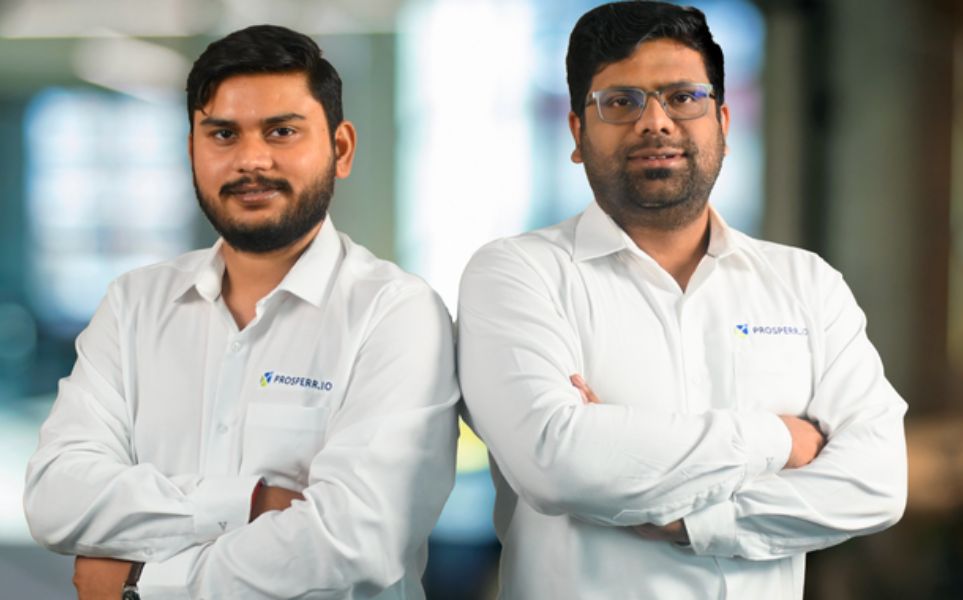
Founded in 2022 by husband-wife duo and former Zomato cofounder Gaurav Gupta and former SkillTap founder Arpana Shahi, Gabit is a health and wellness platform focused on fitness, nutrition, sleep and stress management.
Gaurav Gupta is one of India’s most respected startup operators. As co-founder and COO of Zomato, he was instrumental in building the company from a Delhi restaurant discovery platform into India’s dominant food delivery marketplace — and steering it through its landmark 2021 IPO. His operational pedigree at Zomato brings deep consumer growth expertise directly to Gabit.
Arpana Shahi, his co-founder and spouse, brings her own entrepreneurial track record as the founder of SkillTap — adding complementary experience in building consumer platforms.
Together, they have built Gabit around a thesis that wellness should be holistic, data-driven and accessible — not scattered across five different apps and products.
The Hero Product — Titanium Smart Ring
At the core of Gabit’s offering is its flagship smart ring — a titanium smart ring priced at a highly competitive ₹13,000, with a strict zero-subscription-fee model. Weighing just under 3.1 grams and offering a 7-day battery life, the ring tracks over 150 health markers.
At the core of Gabit’s offering is a Smart Ring built from titanium with 7–10 day battery life. The ring tracks fitness, sleep, stress, and nutrition, and integrates with Gabit’s AI health coach “PEP” and a voice-based food logging system.
| Specification | Detail |
| Material | Titanium |
| Price | ₹13,000 |
| Weight | Under 3.1 grams |
| Battery Life | 7–10 days |
| Health Markers Tracked | 150+ |
| Domains Covered | Sleep, recovery, activity, stress, nutrition |
| Subscription Fee | None — zero mandatory subscription |
The zero-subscription model is Gabit’s sharpest competitive weapon. Ultrahuman — its primary Indian rival — requires a subscription alongside its Ring Air hardware. Gabit deliberately stripped this out to lower the barrier to purchase.
AI Coach PEP — The Engagement Engine
The ring integrates with Gabit’s AI health coach “PEP” and a voice-based food logging system.
PEP is Gabit’s AI-powered personal coach — the digital layer that transforms raw ring data into actionable daily guidance. Key capabilities:
- Voice-based food logging — users speak what they ate, PEP logs and analyses it
- Sleep and recovery coaching — personalised daily recommendations based on ring data
- Stress intervention — real-time alerts and breathing exercises when stress markers spike
- Personalised fitness plans — activity targets calibrated to individual health data
PEP is also the bridge to Gabit’s physical product ecosystem — recommending specific nutrition supplements or skincare products based on each user’s actual health data.
Beyond Hardware — Nutrition & Skincare
The company offers smart rings and chargers, along with real-time glucose insights via a continuous glucose monitor. It also provides smart scales for body marker insights and blood work analysis. Personalised fitness and nutrition plans are available, including coaching and community support. Skincare products are categorised by skin type and concern.
In December 2025, it acquired Swedish nutrition brand Näck to bolster its supplements vertical.
The Näck acquisition is strategically significant — it gives Gabit:
- A credentialled, internationally recognised supplements brand
- Immediate product depth in the nutrition vertical
- European brand equity that resonates with urban Indian wellness consumers
The three-vertical structure — wearables, nutrition, skincare — is designed to create a closed wellness loop: the ring identifies what you need, PEP tells you what to do about it, and Gabit’s products deliver the intervention.
The strategy heavily disrupts the wearable market by shifting the core monetization model away from software subscriptions toward high-margin direct-to-consumer physical goods.
The Celebrity Factor — Ranbir Kapoor & Badshah
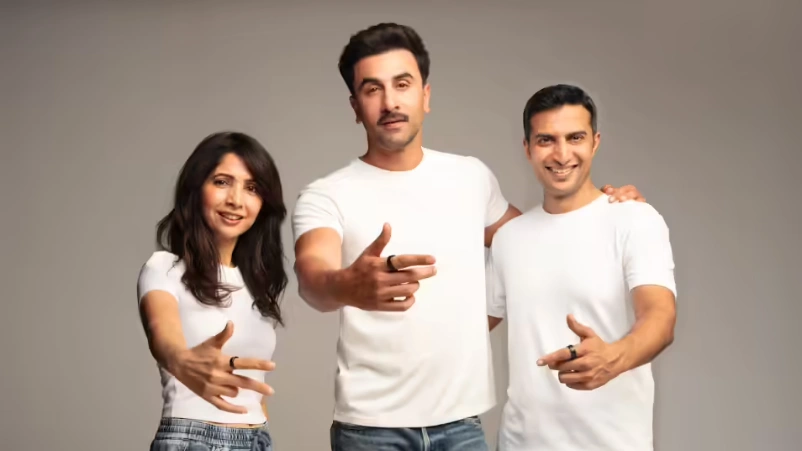
Health-tech startup Gabit has added Bollywood actor Ranbir Kapoor and rapper Badshah as investors to its list of backers.
“Taking care of yourself shouldn’t feel like a full-time job,” said Ranbir Kapoor. “What I love about the GABIT Smart Ring is that it quietly fits into your life. No noise, no distractions, just real change. It’s built for our generation.”
Badshah added that performance begins with health, calling Gabit’s mix of tech, habit-building, and fun a compelling proposition.
Beyond the funding, Ranbir Kapoor and Badshah bring Gabit direct access to the young, aspirational, fitness-conscious urban Indian audience — exactly the demographic most likely to spend ₹13,000 on a smart ring. Their investment is as much a marketing and distribution play as a financial one.
Total Funding — The Cap Table So Far
With the latest round, Gabit’s total funding has crossed $12.7 Mn, excluding an undisclosed round raised from Ranbir Kapoor and Badshah last year.
Gabit has raised $14M in funding from investors like Daffodil Software, QED Innovation Labs and Dragon Slayers, with 43 total investors.
| Metric | Figure |
| Total Funding (disclosed) | $12.7 million+ |
| Total Funding (including celebrity round) | ~$14 million |
| Total Investors | 43 |
| Latest Round | ₹36.2 crore (pre-Series A5) |
Competition — The Smart Ring Battle in India
Gabit competes with the likes of Ultrahuman, Muse Wearables, HAR in India’s growing wearable healthtech ecosystem.
Gabit faces stiff competition from Ultrahuman, Muse Wearables, and HAR in a market that’s attracting well-funded rivals.
Ultrahuman — the best-funded rival — secured $48M in March 2026. Ultrahuman’s Ring Air retails at a higher price point with a mandatory software subscription. Gabit’s ₹13,000 no-subscription model directly undercuts this.
The competitive landscape is heating up across the broader wearable wellness space: Deepinder Goyal-backed wearable startup Temple secured $54M in Q1 2026 at a $190M valuation. Sychedelic raised $3.5M for its smart headphones, and Mave Health pulled in $2.1M in a Blume Ventures-led seed round in March 2026.
The Market Opportunity
India’s smart wearables market is projected to reach $10.26B by 2031.
The funding comes as India’s wearable healthtech ecosystem rapidly moves beyond conventional fitness trackers, with startups pivoting towards AI-powered preventive healthcare, recovery and stress management amid surging consumer demand for integrated wellness platforms spanning diagnostics, coaching, nutrition and skincare.
The post-pandemic wellness boom in India is structural, not cyclical. Urban Indians — particularly millennials and Gen Z — are spending significantly more on:
- Preventive health monitoring (wearables)
- Personalised nutrition and supplements
- Science-backed skincare
Gabit’s three-vertical platform is designed to capture wallet share across all three spending categories from the same user base.